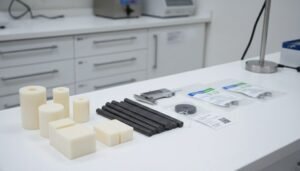
Both PTFE Und PFA are important in industry and daily life. They are both fluoropolymers, but many people are always confused about choosing the suitable one between them. This article discusses their differences.
PTFE and PFA are both plastic materials. They are both found by the Dupont company, and Teflon is a trademark belonging to Dupont, including PTFE and PFA material.
PTFE and PFA have different properties
PTFE and PFA Property data chart
| Item | PTFE | PFA |
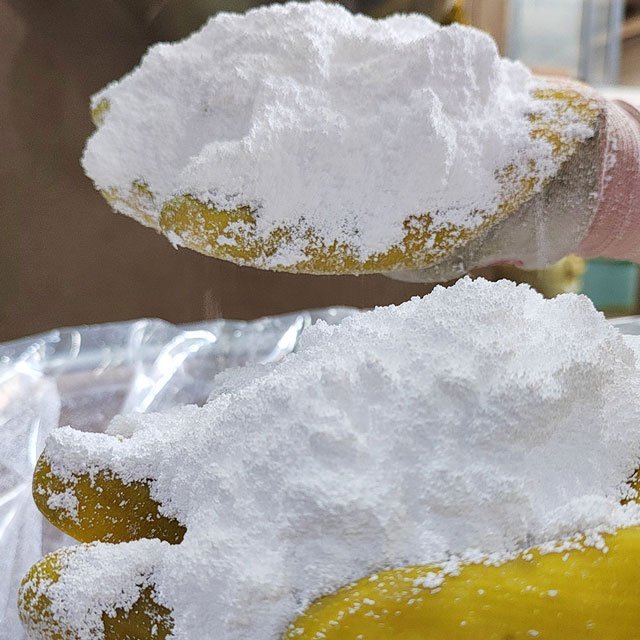
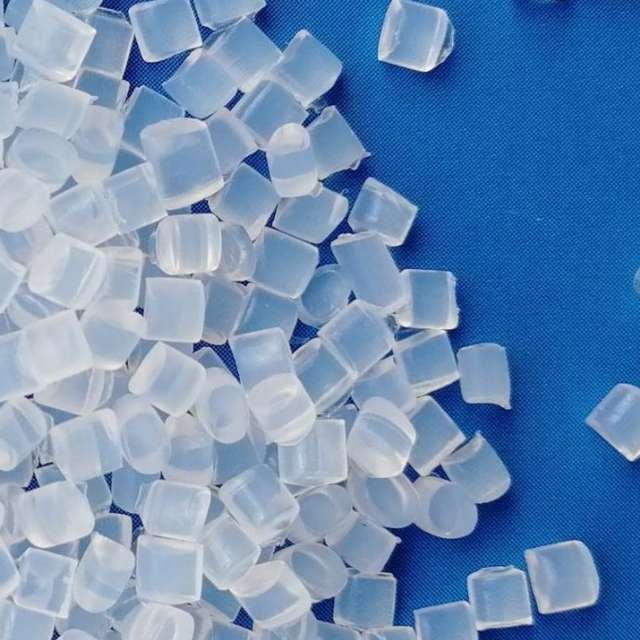
| Apearance | White | Transparent granule |
| Shape | Powder | Pellet |
| Schmelzpunkt | 327°C (620.6°F) | 305°C (581°F) |
| Melt viscosity | 1011~11013 (380℃) | 104~105(380℃) |
| Continuously Work Temperature | -200 – +250℃ | -80℃- +260℃ |
| Hardness (shore) | D50~D65 | D60 |
| Tensile strength | 25~40 | 28~35 |
| Elongation (%) | 250~450 | 300~400 |
| Impact strength | 160~170 | No cracks |
| Specific gravity | 2.13~2.22 | 2.12~2.27 |
| Molding shrinkage | 0.02~0.05 | 0.4 |
| Dielectric constant | 2.1 | 2.1 |
| Electric breakdown strength | 19 | 20 |
| Weather resistance | Excellent | Excellent |
| Resistance to chemical reagents | Excellent | Excellent |
| Fire resistance | 95 | 95 |
| Volume resistivity (Ω*cm) | >10^18 | >10^18 |
| Static friction coefficient | 0.02 | 0.05 |
The appearance
PTFE resin is a white, powder with a waxy feel and is easy to stick on your hands. PFA resin is a semi-transparent granule. some factories produce in lentil shapes and others in pellet forms.
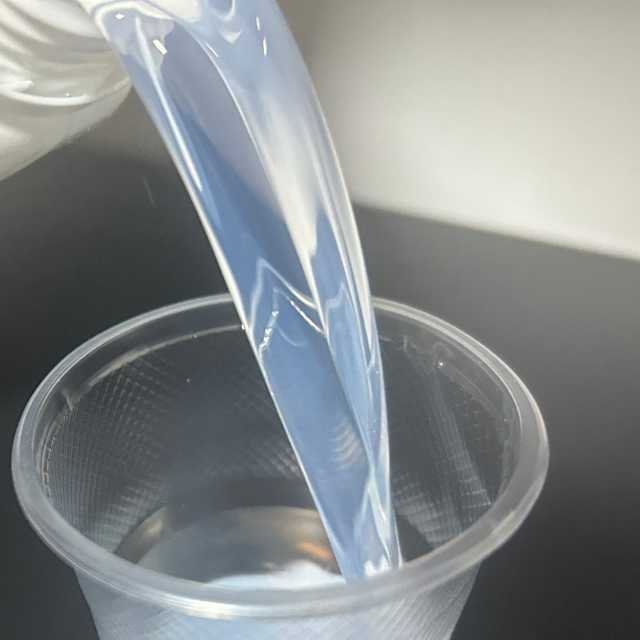
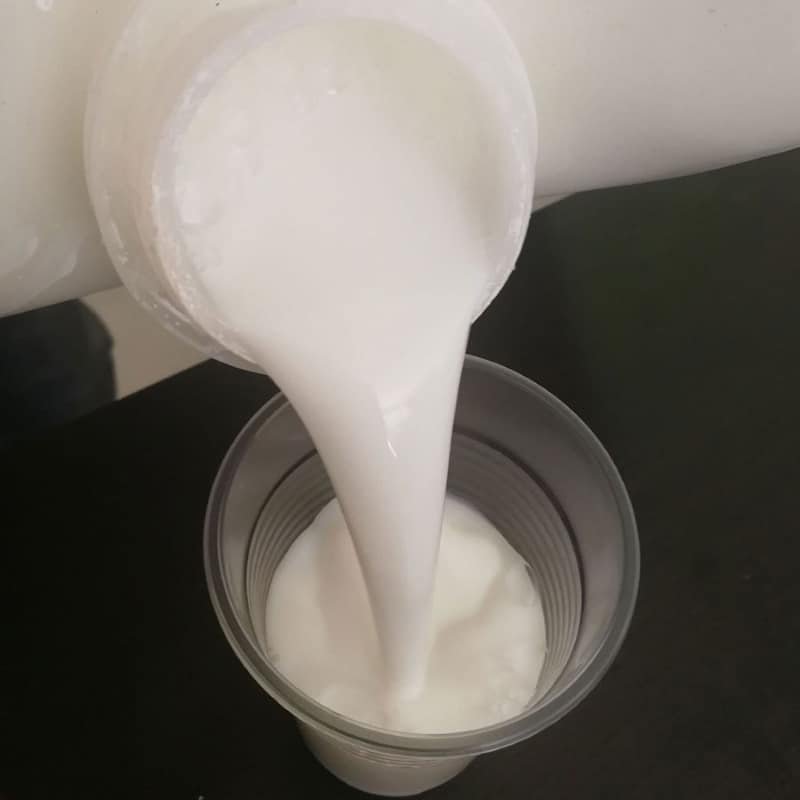
PTFE Dispersion is a milky liquid, But FEP Dispersion is a Translucent liquid.
The processing methods different
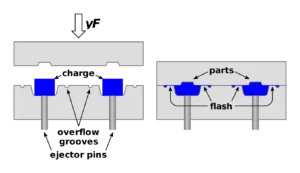
Different applications with different processing methods. PTFE has a very high viscosity and cannot be melt-extruded. It can only be compression molding or paste-extruded, and then sintering. When making cables, they must be paste-extruded, sintered at high temperatures, or wrapped and sintered. PFA can be formed through compression molding, extrusion, injection molding, and transfer molding. For cable production, PFA can be melt-extruded and formed in one step, with different grades of PFA chosen based on the cable specifications.
Different applications with different processing methods.
| Anwendung | PTFE | PFA |
| Parts, Valves, Plugin, Sealing | compression molding, Sintering | Compression molding |
| Tube, tape, Wire, Cable | paste-extruded, Wape, Sintering | Injection molding |
| Rod, Tube, Pipe | Ram Extruded | Extruded |
| Film, Sheets, Sealing | Skived | Calendering |
| Beschichtung | Electrostatic spraying | Electrostatic spraying |
| Packing | Imprägnierung | Imprägnierung |
PTFE and PFA’s Flexibility
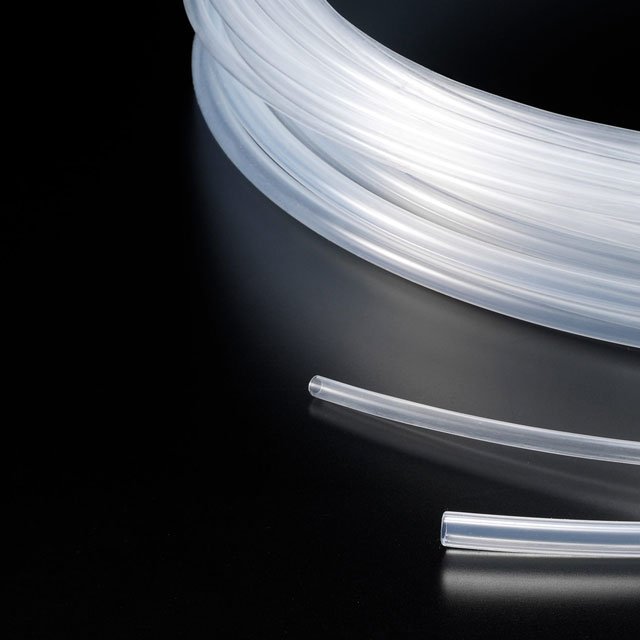
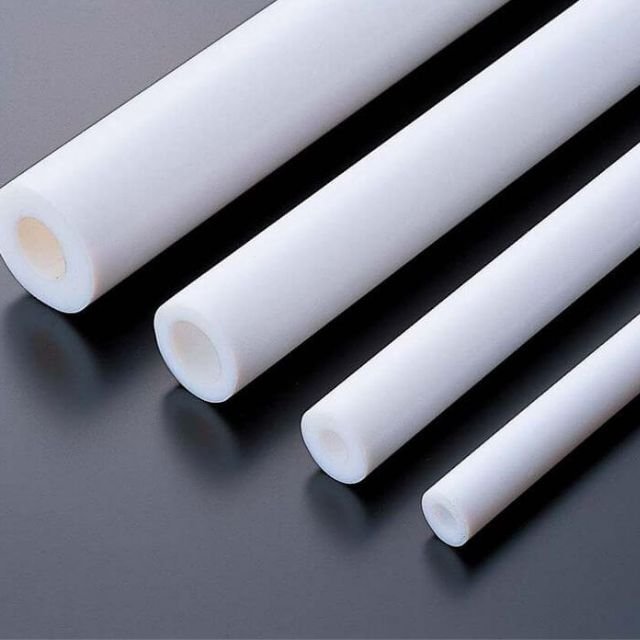
PTFE tubes are relatively hard and difficult to bend, while PFA offers excellent flexibility, producing transparent and easily bendable tubes. In terms of flexibility, PFA surpasses PTFE, especially in piping applications.
The application
While most applications are similar, such as sheets, tubes, Flim, and Rods, Nonstick Coating
A key difference is that PFA resin can be made into heat-shrinkable tubes, whereas PTFE cannot.
Price
PFA material is three times or more expensive than PTFE.
Conclusion:
- PFA and PTFE are both fluoropolymers.
- PTFE is the more commonly used fluoropolymer, commonly known as “Teflon”.
- PFA is melt processable and more versatile than PTFE, but PTFE is superior in water absorption and weathering resistance.
- Both PFA and PTFE are well suited for use in cables. Meanwhile, PFA is more often used in industrial applications, especially laboratory equipment industrial tubing, and semiconductors, but PTFE is more commonly used, especially for sealing corrosion protection, membranes, hoses, and cookware is very popular.
Choose the appropriate product based on your specific application.