A $2,000 maintenance call triggered by a $0.30 roll of tape. That’s not a hypothetical — that’s a real job I watched unfold with a distributor client in Southeast Asia. An installer grabbed white PTFE tape out of habit for a 1-inch industrial cooling water line. The fitting looked fine on day one. By week four it was weeping. By week six it had failed completely. The root cause? Wrong density for the thread size and operating pressure. Nobody told the installer that color is a density code.
That single misunderstanding costs facilities engineers, OEM assembly lines, and distributor reputations more than most people want to admit. Once you understand what the color actually encodes, the selection becomes a two-minute decision instead of a guess.
The Short Answer: Color Is a Density Code, Not a Design Choice
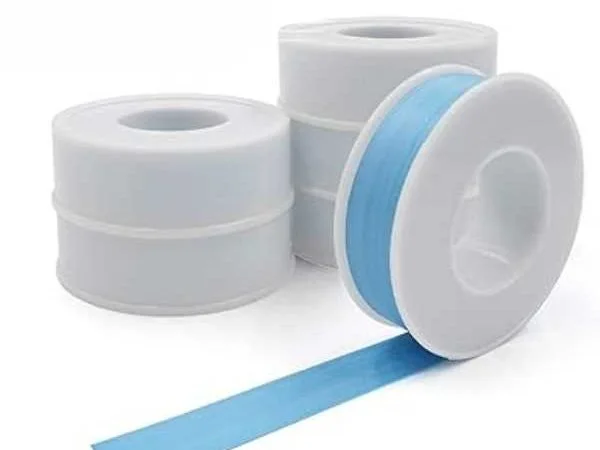
Blue PTFE tape is high-density. White PTFE tape is low-density. That single sentence explains 90% of the performance difference between them.
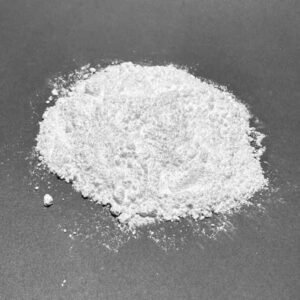
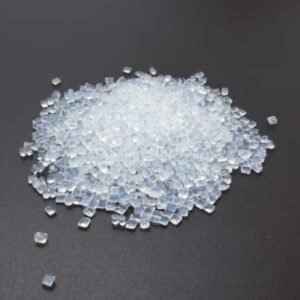
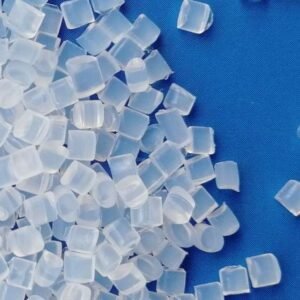
PTFE thread seal tape — whether white, blue, yellow, or pink — is made from the same base polymer: Polytetrafluorethylen. The color is added via a small percentage of pigment, typically less than 0.4% by weight, and serves as a visual shorthand for density grade and intended application. The pigment changes nothing about chemical resistance or temperature tolerance.
What does change is how much PTFE material is packed into each unit volume of tape. That’s density. And density directly affects how well the tape fills microscopic thread imperfections, how many wraps you need, how resistant it is to shredding under torque, and whether your joint holds under real operating conditions.
White tape runs at 0.37–0.55 g/cm³. Blue tape runs at 0.80–1.20 g/cm³. At the upper end, you’re putting more than twice the material into the same physical space. That matters enormously on larger threads operating at higher pressures.
One thing I tell every new distributor I work with: the color coding is a convention, not a global mandatory standard. Different manufacturers interpret "blue" differently. Some blue tapes are average-density general-purpose products. Others are full-density industrial grade. Always verify the density figure on the technical datasheet. Never rely on color alone.
Head-to-Head Specifications
Before you commit to a SKU, read the numbers. Here is the complete technical comparison matrix based on industry-standard grades.
Density, Thickness, and Wrap Count
| Parameter | Weißes PTFE-Band | Blue PTFE Tape |
|---|---|---|
| Dichte | 0.37–0.55 g/cm³ | 0.80–1.20 g/cm³ |
| Dicke | 0.075–0.10 mm (3–4 mil) | 0.10–0.15 mm (4–6 mil) |
| PTFE Purity | ≥99% | ≥99% |
| Pigment Content | 0% (natural white) | <0.4% (blue pigment) |
| Recommended Wraps | 3–5 wraps | 2–3 wraps |
| Elongation | >100% | >100% |
| Zugfestigkeit | ~10 N/mm² | ~15 N/mm² |
Pressure, Temperature, and Thread Compatibility
| Parameter | Weißes PTFE-Band | Blue PTFE Tape |
|---|---|---|
| Max Operating Pressure | Up to 1,000 PSI | Up to 10,000 PSI (full-density) |
| Temperature Range | -200°C to +260°C | -200°C to +260°C |
| Decomposition Threshold | >260°C | >260°C |
| Recommended Thread Diameter | Up to 3/8" NPT | 1/2" to 2" NPT / BSP |
| Thread Types | NPT, BSP, ISO 7-1 | NPT, BSP, ISO 7-1 |
| Substrate Compatibility | Copper, brass, PVC, steel | Steel, stainless, brass, aluminium, CPVC |
| Suitable for Gas Lines? | NEIN | NEIN |
| Suitable for Oxygen Lines? | NEIN | NEIN |
Critical note: Neither blue nor white PTFE tape is rated for combustible gas lines. Yellow gas line PTFE tape is the only color with the density profile and industry classification for natural gas, LPG, and propane systems. Using the wrong color on a gas fitting is a safety and compliance failure — not just a performance shortfall.
Applicable Standards by Grade
| Standard | What It Requires | Which Tape Qualifies |
|---|---|---|
| MIL-T-27730A | Min. 3.5 mil thickness, ≥99% PTFE purity | White and blue (if thickness met) |
| A-A-58092 | MIL-T-27730A + min. density 1.2 g/cm³ | Full-density blue / pink only |
| EN 751-3:2022+A1:2024 | EU metallic threaded joints, gas & hot water | Grade-specific; verify with supplier |
| BS-7786:2006 | UK PTFE tape grades and quality standards | Yellow required for UK gas fittings |
| FDA 21 CFR 177.1550 | Food-contact compliance for PTFE materials | Both qualify — purity and pigment must be confirmed |
When White PTFE Tape Is the Right Call
White tape is not inferior. It is purpose-built for a defined job, and within that job it delivers exactly what’s needed.
Use white PTFE tape when:
- Thread diameter is 3/8 inch NPT or smaller
- Operating pressure is below 150 PSI — residential water, garden irrigation, household plumbing fixtures
- The connection is easily accessible for re-tapping if needed
- Your downstream customer is a retail plumber, hardware distributor, or DIY channel
- Price per roll is the dominant purchase criterion
White tape dominates volume sales. In the B2B distribution channel, white 12mm × 10m rolls are the commodity unit — fast-moving, margin-thin, and intensely price-competitive. At Peflon, white tape represents our largest share of tape volume by unit count. It’s the entry point into a buyer relationship, not the margin engine.
The real cost trap with white tape in industrial applications is subtle. Because it’s thinner and lower density, installers need 4–5 wraps to achieve an adequate seal on larger threads. On a production line assembling hundreds of fittings per day, those extra wraps add up in both tape consumption and labor time. I’ll quantify that properly in the TCO section below.
When Blue PTFE Tape Earns Its Place — and When It Doesn’t
This is where selection becomes genuinely consequential — and where I’ve seen the most costly errors in both directions.
Blue PTFE tape is the correct specification when:
- Thread diameter is 1/2 inch or larger, up to 2 inches
- Operating pressure exceeds 150 PSI — hydraulic systems, industrial water circuits, oil lines
- The medium is aggressive: acids, alkalis, solvents, or petroleum-based fluids
- Pipe material is stainless steel, where galling risk on threads demands a denser lubricating layer
- Your customer is an industrial OEM, commercial plumbing contractor, or process plant maintenance team
- Connection access is limited and the seal must hold without re-entry
One scenario I handle regularly: stainless steel fittings in chemical processing lines. Stainless-to-stainless thread engagement without adequate lubrication causes galling — threads seize, and the fitting becomes permanently locked. High-density blue PTFE tape provides a deformable buffer between the mating surfaces. White tape at lower density compresses and shreds under tightening torque before it can do this job effectively.
A valve manufacturer in Germany, sourcing raw PTFE fine powder through our supply chain, switched their assembly line from white to blue tape on all fittings 1/2 inch and above. Their tape consumption per fitting dropped by 40%. Rejection rate on pressure testing dropped from 3.2% to 0.8% within two months. The economics were not marginal — they were decisive.
Now the other side of this: blue tape is not a universal upgrade, and over-specifying it creates its own problems.
On a 1/4 inch showerhead thread, full-density blue tape can over-fill the thread valley. The fitting won’t seat properly. Instead of a compression seal, you get an incomplete thread engagement — mechanical failure, not a sealing improvement. I had a client in Turkey trying to standardize their entire installation kit on one tape color to simplify inventory. Reasonable idea, wrong execution. Their callbacks on small-diameter fittings went up, not down, after they switched everything to blue.
The discipline is this: right density for right thread size. Blue tape is not universally better. It is specifically better for the applications it was designed for.
Total Cost of Ownership: The Calculation Most Buyers Skip
This is the conversation I wish more procurement teams would have before defaulting to the cheapest white tape on the market.
The logic is simple. Higher-density blue tape requires fewer wraps per fitting to achieve an effective seal. Fewer wraps means less tape consumed per joint. On large-scale assembly, that material savings compounds significantly.
TCO Comparison: 1,000 Fittings at 1/2" NPT
| Parameter | Weißes PTFE-Band | Blue PTFE Tape |
|---|---|---|
| Wraps per fitting | 5 wraps | 3 wraps |
| Tape consumed per wrap (approx.) | ~0.12m | ~0.12m |
| Tape consumed per fitting | 0.60m | 0.36m |
| Total tape for 1,000 fittings | 600m | 360m |
| Tape saved | — | 240m (40% reduction) |
| Typical unit cost per meter | $0.008 | $0.014 |
| Total material cost / 1,000 fittings | ~$4.80 | ~$5.04 |
| Effective cost difference | — | +$0.24 total |
The delta is $0.24 per 1,000 fittings. For that $0.24 premium, you get 40% less tape waste, 2–3 fewer wraps per installation (labor time saved on production lines), significantly lower rejection rates on pressure testing, and a seal rated for ten times the operating pressure.
That’s the TCO case. It’s not about which tape is cheaper per roll. It’s about what each roll actually costs you per sealed joint.
The Standards Nobody Tells You About
Compliance is where most distributors underinvest in knowledge — and where industrial buyers make or break supplier relationships.
MIL-T-27730A is the legacy U.S. military specification, now technically superseded but still cited widely in procurement documents. It requires minimum 3.5 mil thickness and 99% PTFE purity. Here’s the problem: it sets no minimum density standard. A low-quality, low-density white tape can technically pass MIL-T-27730A. As MercaTape’s analysis of the spec bluntly notes, the old standard had no real teeth — if it was white and thin enough, it passed.
A-A-58092 is the meaningful benchmark. It retains the thickness requirement and adds a minimum density of 1.2 g/cm³. Very few products on the market genuinely meet this. Only full-density blue, pink, or red tape qualifies. If your customer is in aerospace, defense, or critical infrastructure, this is the standard they will quote — and they will ask for tested values, not template certificates.
I’ve had buyers ask me to certify a blue tape to A-A-58092 when the product’s density was only 0.80 g/cm³. That product does not qualify. The minimum is 1.2 g/cm³, and the test report needs to prove it.
EN 751-3:2022+A1:2024 governs the European Union market for PTFE thread sealing tape on metallic joints carrying gas and hot water. If you’re distributing into Germany, France, Benelux, or Scandinavia, your documentation needs to reference this standard. It carries its own test protocols and is entirely distinct from U.S. specifications.
We had a European buyer who required EN 751-3 compliance documentation but had a product built to MIL-T-27730A. The two frameworks don’t map directly onto each other. It took three weeks of re-testing and document reconstruction before we could deliver a compliant package. That experience cemented one rule for me: compliance documentation must match the target market, not just the product.
FDA 21 CFR 177.1550 covers food-contact compliance. Breweries, dairy processors, and pharmaceutical manufacturers sourcing through distribution channels will ask for this. Both white and blue tapes made from virgin PTFE resin qualify — but purity and pigment must be confirmed. Not all blue pigments are food-safe. Always request explicit confirmation from your supplier.
The Full PTFE Tape Color Map
Blue and white are two points on a wider system. Understanding the complete color logic prevents cross-application errors that are far more common than most installation teams admit.
| Farbe | Density Grade | Primary Application | Gas-Rated? |
|---|---|---|---|
| Weiß | Low (0.37–0.55 g/cm³) | Household water, small NPT threads ≤3/8" | NEIN |
| Blue | High (0.80–1.20 g/cm³) | Industrial water, oil, hydraulic, stainless fittings | NEIN |
| Yellow | Double-density (~1.35–1.50 g/cm³) | Natural gas, LPG, propane, butane lines | Ja |
| Pink / Red | Triple-density (1.20–1.50 g/cm³) | High-pressure commercial water, large-diameter pipes | NEIN |
| Green | Max density, grease-free | Oxygen lines, medical gas, welding gas supply | O₂ only |
| Gray / Silver | Nickel-impregnated | Stainless steel anti-seize, anti-gall applications | NEIN |
| Black | Standard-high density | Industrial applications, solar systems, specialty ID | NEIN |
The single most dangerous misconception I encounter regularly: buyers assuming blue tape is suitable for gas lines because it "looks industrial." Blue tape is not gas-rated under any recognized standard. Yellow PTFE tape is the only color with the density profile and industry classification for combustible gas systems. This is not a gray area.
A Distributor’s Buying Logic: Margin Lives in the Grade
If you’re reading this as a distributor or raw material reseller, the technical content above is your table stakes. What affects your bottom line is how you position these two products within your catalog.
White tape is a traffic product. It moves fast, anchors your price list, and builds repeat purchase cycles. Margins are thin — typically 8–15% on commodity white tape — because the market is fully transparent. Your buyer can check competitor pricing in 30 seconds.
Blue tape is a value product. It serves a smaller but significantly less price-sensitive audience. Industrial buyers care more about documentation integrity, batch consistency, and lead time reliability than saving $0.05 per roll. Margins on properly specified, certified blue tape can reach 25–40% depending on your target market.
The play I recommend to our key accounts: bundle blue tape as part of an application-specific solution kit. A stainless steel fitting installer doesn’t just need tape — they need tape, a specification sheet showing density and pressure ratings, a clear color-to-application guide, and a supplier who can back it up with a COA. That’s a solution. Solutions command margin. Commodity tape does not.
Practical Procurement Parameters
| Parameter | Weißes PTFE-Band | Blue PTFE Tape |
|---|---|---|
| Typical MOQ (from Peflon) | 5,000 rolls | 2,000 rolls |
| Standard Lead Time | 7–15 days | 10–20 days |
| OEM / Private Label | Available | Available |
| Custom Width Options | 6mm, 12mm, 19mm, 25mm | 12mm, 19mm, 25mm |
| Custom Thickness | 0.075mm, 0.10mm | 0.10mm, 0.15mm |
| Certifications Available | FDA, MIL-T-27730A, UL | FDA, A-A-58092, MIL-T-27730A |
| Packaging Options | 10m, 15m, 25m rolls | 10m, 25m rolls |
| Shipping Terms | FOB / CIF available | FOB / CIF available |
OEM buyers sourcing at scale: packaging design, label language, roll length, and certification documentation are all customizable. We work with distributors across Europe, the Middle East, and Latin America who private-label our tape under their own brand. The PTFE fine powder we use is sourced from controlled production batches — the same supply chain that feeds our broader fluoropolymer product range.
FAQ: What Buyers Ask Most
Can I use blue Teflon tape on gas lines?
No. Blue PTFE tape is not rated or certified for combustible gas applications — natural gas, LPG, propane, or butane. You must use yellow PTFE tape, which is specifically engineered with higher density (1.35–1.50 g/cm³) and validated against gas-line standards including EN 751-3 in Europe and relevant codes in North America.
How many wraps of blue PTFE tape do I need?
For standard applications, 2–3 wraps on clean male threads is sufficient with high-density blue tape. Start on the second thread from the pipe end, wrap clockwise with consistent tension, and press the final layer firmly into the threads before assembly. More than 3 wraps on smaller fittings risks over-filling the thread valley and preventing full engagement.
Is blue tape actually stronger than white tape?
In terms of tensile strength and density, yes — blue tape typically delivers ~15 N/mm² tensile strength versus ~10 N/mm² for standard white tape. But "stronger" only matters in the context of the application. On a 1/4-inch household thread at low pressure, the extra strength of blue tape is irrelevant and may actually cause installation problems.
Does blue PTFE tape meet A-A-58092?
Only if the density reaches 1.2 g/cm³ or above. Many products sold as "blue tape" have densities of 0.80–0.90 g/cm³, which does not qualify for A-A-58092. Always request the actual test report, not just a COA that claims compliance. The density value must appear as a tested figure, not an estimated range.
What’s the difference between Blue Monster tape and standard blue PTFE tape?
Blue Monster (Mill-Rose) is a branded blue PTFE tape with a documented density of approximately 0.80 g/cm³ and a pressure rating up to 10,000 PSI for water and oil lines. It is a reliable mid-to-high density product, though its density falls below the A-A-58092 minimum of 1.2 g/cm³. Standard blue tape from other manufacturers varies widely — always verify the datasheet rather than comparing by brand name alone.
The Grade Decides the Outcome, Not the Color
After more than a decade working across this supply chain — from raw PTFE fine powder procurement to finished tape distribution — the pattern I keep seeing is the same: tape failures are almost never material failures. They’re selection failures.
The tape didn’t fail. The decision to use white tape on a 1-inch industrial fitting failed. The decision to use blue tape on a 1/4-inch household thread failed. The refusal to read a datasheet and match density to application failed.
Color tells you where to start. Density tells you whether the product fits your job. Standards documentation tells you whether it fits your market. All three have to align before you commit to a specification.
If you’re evaluating a supplier switch, expanding your product range, or building a new OEM assembly specification, the starting point is always a datasheet with actual tested values — not a color swatch and a price list.
Ready to Specify the Right Grade?
Whether you’re a manufacturer evaluating a switch from white to blue tape on your assembly line, or a distributor building a compliant, margin-positive tape product range, the process is the same: verify density, confirm the standard, match the thread.
At Peflon, we supply blue PTFE thread seal tape, standard white PTFE tape, and the full color-coded tape range — with OEM and private label options, documented certifications, and technical support to help you match grade to application without guessing.
Send us your thread specification, target market, and compliance requirement. We’ll respond with a datasheet, a density-verified sample, and a lead time — not a catalog PDF.