
FEP for Cable & Wire — Low-Smoke, Low-Halogen Insulation Resin
FEP (fluorinated ethylene propylene) is a key wire-and-cable fluoropolymer — low-smoke, low-halogen (Cl/Br) and flame-resistant, with a wide MFR range for both extrusion and injection molding.
- Five wire-grade FEP pellets, MFR 2.0–20 g/10 min, matched to line speed and wall thickness
- Cross-reference support against Teflon™ FEP grades — no spec re-engineering required
- KKDIK / REACH / FDA documented — trial samples available before you commit
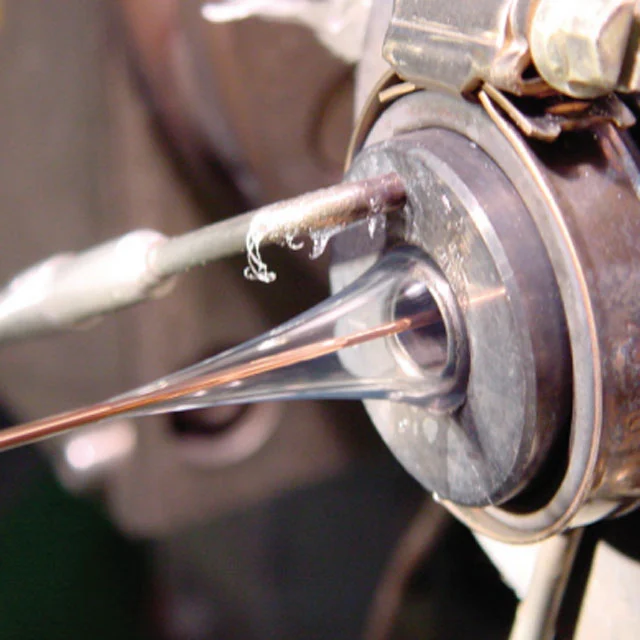
Peflon FEP for Cable & Wire
Peflon’s FEP cable resins offer a wide range of MFRs (2.0 to 32 g/10 min) and suit both extrusion and injection molding. Our fluorinated ethylene propylene (FEP, CAS 25067-11-2) wire resins are low-smoke, low-halogen (Cl/Br) and supplied with REACH, SVHC and RoHS documentation. Peflon FEP grades used in plenum-rated communications cable are formulated to support the fire and smoke performance required by UL 444, the standard for communications cables referenced by NEC Article 800 CMP ratings — confirm compliance with your cable manufacturer’s own UL listing.
Its wire-grade FEP resin makes flexible cables with high melt strength, stable processing temperatures and excellent resistance to chemicals and solvents, with operating temperatures from −80 °C to 200 °C (−112 °F to 392 °F). These five grades share the same base resin as Peflon’s broader 17-grade FEP catalog — if your process needs a coating-grade dispersion or powder instead, see the full range there.
FEP Cable & Wire Properties
Wire and cable buyers specify FEP primarily on its electrical and thermal properties — the values below are typical for Peflon’s wire-grade FEP pellets.
| Property | Typical Value | Notes |
|---|---|---|
| Dielectric constant | ~2.1 (1 MHz) | Low and stable across frequency — preserves signal integrity |
| Dissipation factor | Very low | Grade-dependent |
| Melting point | 260 ± 5°C | — |
| Continuous service temperature | −80°C to 200°C | −112°F to 392°F |
| Flame performance | >800°C before burning/smoking | Supports low-smoke, plenum-rated (CMP) constructions |
| Flex life | 10M+ cycles | Grade-dependent |
| Halogen content | Low-halogen (Cl/Br) | Per IEC 61249-2-21 — fluorine itself is not restricted by this standard |
FEP Wire & Cable Grades & Data Sheets
Five of Peflon’s fourteen FEP pellet grades are specifically suited to wire and cable insulation/jacketing, spanning MFR 2.1–20 g/10 min for different line speeds and wall thicknesses. Click a grade to download its Technical Data Sheet (PDF). For the full 17-grade FEP catalog (including dispersion and powder forms), see Peflon FEP.
| Grade | MFR (g/10 min) | Feature | Typical Application |
|---|---|---|---|
| PF-302 | 2.1–4.0 | Coating grade — equivalent to Teflon™ FEP 9302X | Tubes, piping, linings, bellows, wire & cable jackets |
| PF-303 | 4.1–8.0 | Hydrophobic | Wire & cable insulation, small tubing, injection-molded parts |
| PF-304 | 8.1–12.0 | Wide temp range, chemical compatibility, hydrophobic | Wire insulation, small tubing, injection-molded parts |
| PF-305 | 12.1–20 | FEP injection, FEP extrusion | Thin-wall wire & cable insulation, industrial film |
| PF-311 | 2.1–5.0 | Heat-stress-crack-resistant, 3D-printer FEP | Wire insulation, thin-walled tube |
Note: typical values from technical data sheets, for reference only — confirm final selection by line speed, wall thickness and end use.
Cable Types Using Peflon FEP Resin
Peflon’s FEP wire resins are extruded by processors into insulation and jacketing across a wide range of cable constructions — from hookup wire to high-temperature spark ignition cable.
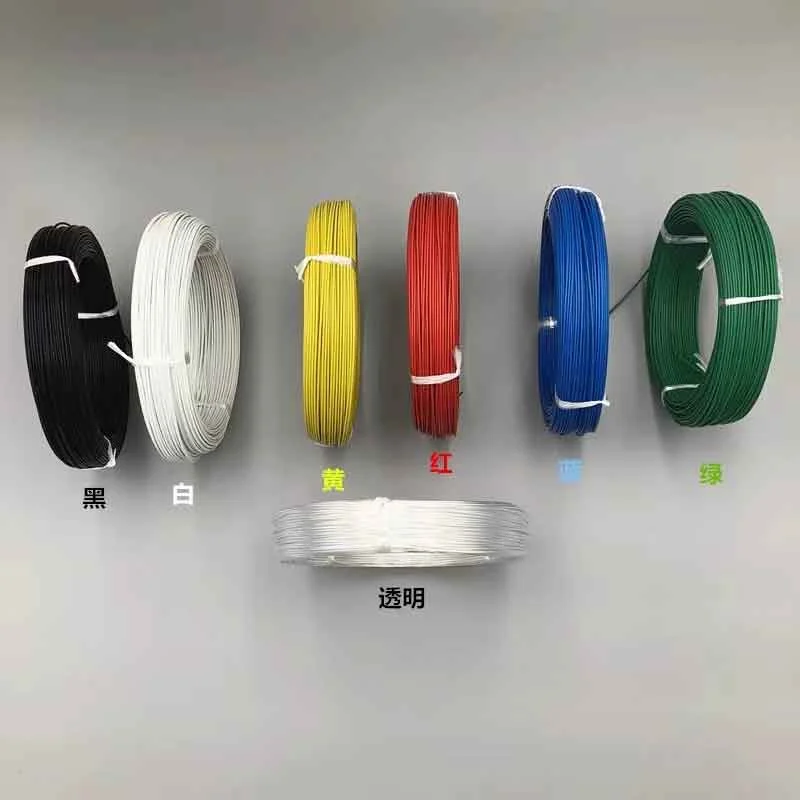
Hookup & Control Wire
Processors extrude Peflon FEP onto hookup and control wire conductors where chemical resistance and a wide service-temperature range matter more than bulk insulation cost.
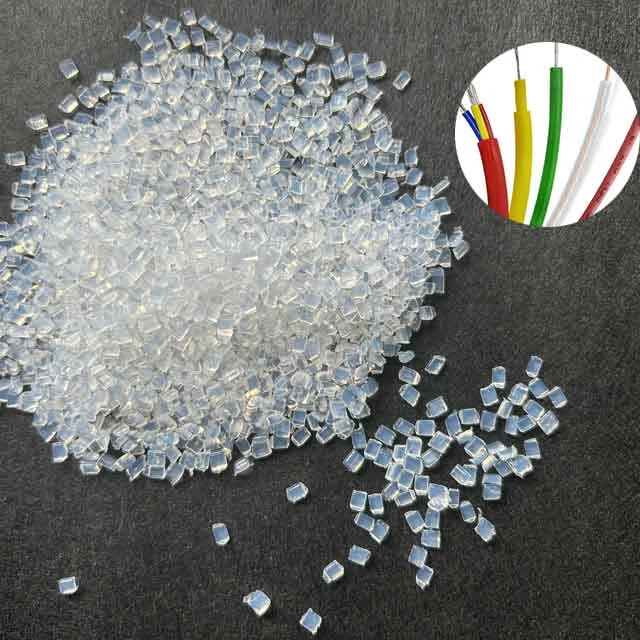
High-Temperature & Spark Ignition Wire
Processors specify Peflon FEP for spark-plug and ignition wire insulation where continuous service above 150°C and dielectric stability under vibration are required.
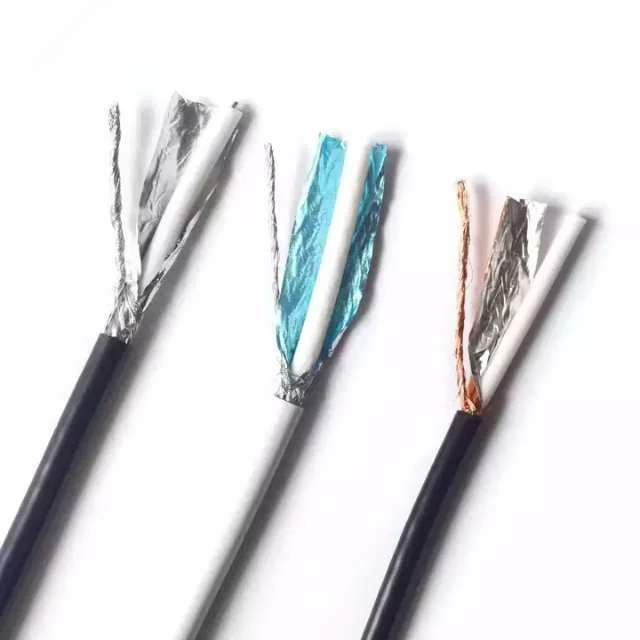
Shielded & Multi-Conductor Data Cable
Processors extrude thin-wall FEP insulation (PF-305) onto individually shielded conductors for high-speed data and LAN cable, where low, stable dielectric constant preserves signal integrity.
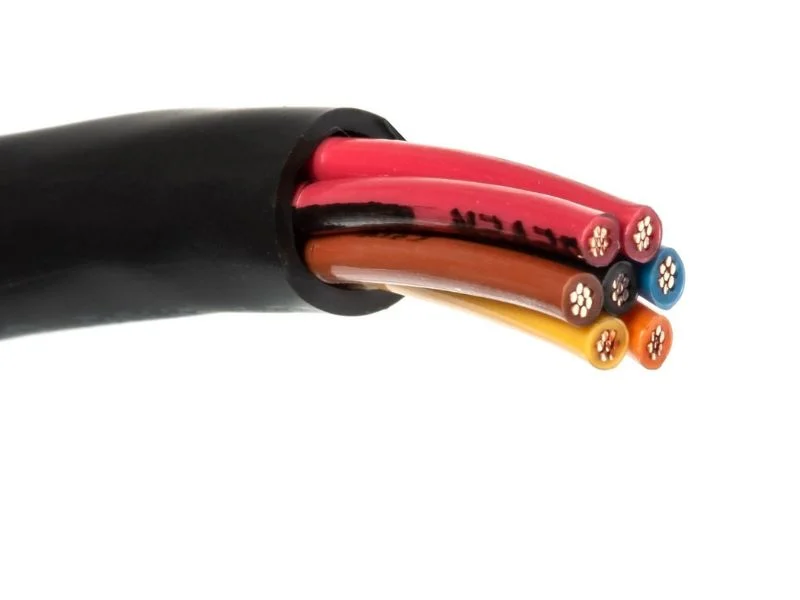
Plenum (CMP) & Low-Smoke Cable
Processors building CMP-rated communications cable specify FEP for its low smoke generation and flame resistance above 800°C, supporting the fire performance tested under UL 444.
How Processors Extrude Peflon FEP Onto Wire & Cable
Processors extrude Peflon FEP pellets onto bare or tinned copper conductor as primary insulation, or over a cabled core as an outer jacket — melt strength and stable processing temperature keep wall thickness consistent at line speed.
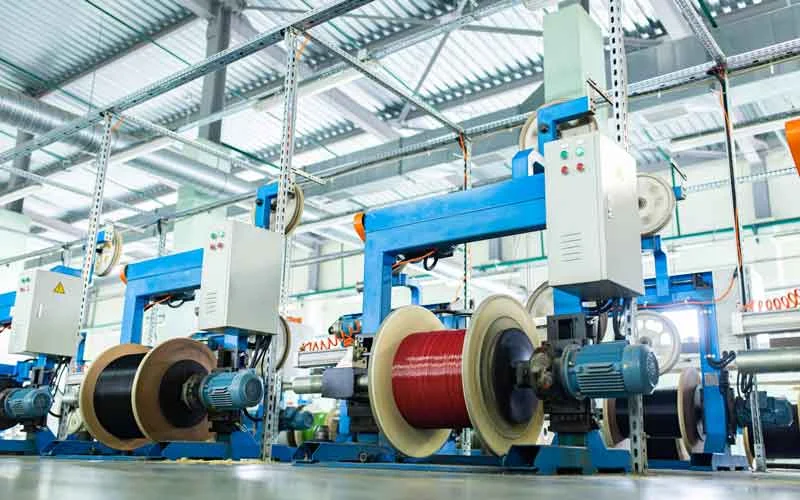
Primary Insulation Extrusion
Processors melt-extrude FEP directly onto bare or tinned copper conductor on wire lines, using MFR and melt strength to hold wall thickness at line speed.
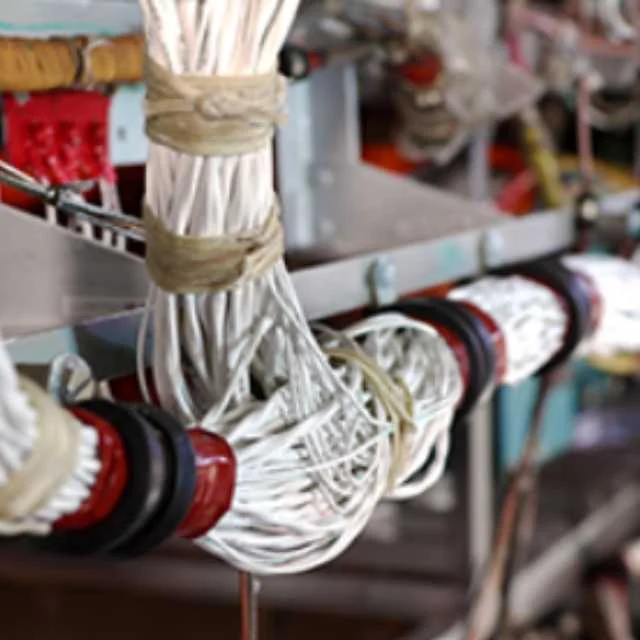
Jacket Extrusion Over Cabled Core
Processors extrude a higher-MFR FEP jacket over a cabled, shielded core for multi-conductor and data cable constructions.
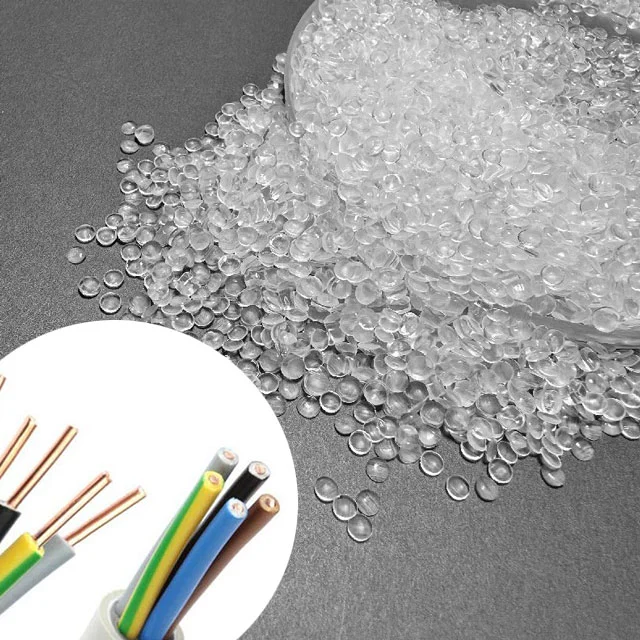
Foam-Skin Extrusion for High-Speed Data
Processors use a foamed FEP core with a solid skin to lower dielectric constant further for high-speed data cable — see Peflon’s foamed FEP resin guide for the process.
FEP Cable Resin Chemical Compatibility
FEP resists virtually all industrial acids, bases and solvents across the full pH range — the exceptions below are the rare cases worth flagging before you finalize a spec.
| Chemical | Class | Resistance |
|---|---|---|
| Sulfuric, hydrochloric, nitric, hydrofluoric acids | Mineral acid | Excellent, full concentration range |
| Sodium hydroxide (40%) | Strong base | Excellent |
| Acetone, methanol, toluene | Solvent | Excellent |
| Chlorinated solvents | Chlorinated solvent | Excellent |
| Molten alkali metals | — | Not recommended, any temperature |
| Elemental fluorine | — | Not recommended above 300°C |
| Certain fluorinated solvents under pressure | — | Limited above 200°C |
Why Peflon FEP Wire Resin
Cable and wire manufacturers qualifying a new FEP resin source weigh regulatory documentation, MFR consistency and flame/smoke performance as heavily as price.

REACH-Documented & Low-Halogen (Cl/Br)
Peflon FEP data sheets carry REACH, SVHC and RoHS certification, and the resin is low-halogen (Cl/Br) per IEC 61249-2-21. As a fluoropolymer, FEP inherently contains fluorine, which that standard does not restrict, and it falls within the broad OECD/EPA definition of PFAS.
- REACH / SVHC / RoHS documentation on file
- Low-halogen (Cl/Br) per IEC 61249-2-21
Flame Resistance & Signal Integrity
Peflon FEP withstands temperatures above 800°C before burning, smoking or decomposing, supporting plenum-rated (CMP) constructions under UL 444 — while its low, stable dielectric constant (~2.1) preserves signal integrity in coaxial, LAN and high-speed data cable.
- Low smoke generation above 800°C
- Stable dielectric constant across frequency
Extreme Flexibility, Wide MFR Range
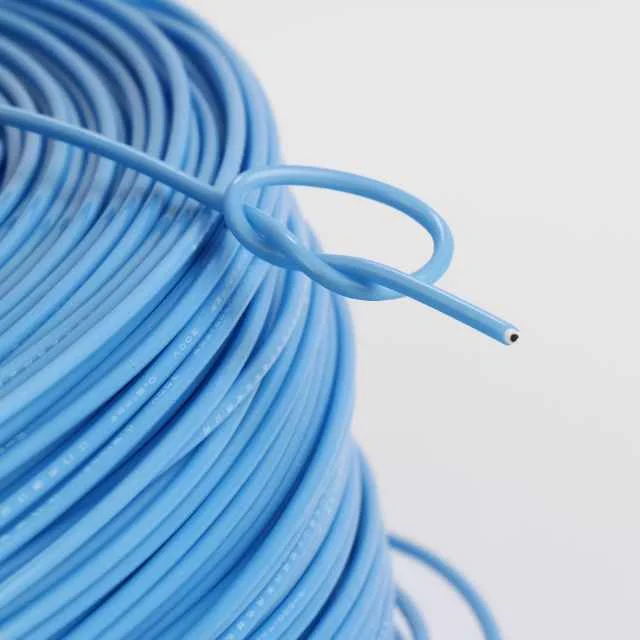
High flex performance — wires can continuously flex up to and beyond 10 million cycles. Five grades span MFR 2.1–20 g/10 min, matched to your line speed and wall thickness rather than a one-size-fits-all resin.
- 10M+ flex cycles, grade-dependent
- Grade cross-reference support against your current spec
Easy to Process, Documented Second Source
With a melting point of 260 ± 5°C, Peflon FEP has high melt strength and stable processing temperatures, making it easy to melt-extrude. Qualify Peflon as a documented second source alongside Daikin, Chemours or AGC — trial samples available before you commit.
- Stable processing window for consistent wall thickness
- Trial samples shipped with matching TDS
FEP for Cable & Wire — Frequently Asked Questions
What MFR range does Peflon FEP for wire & cable cover?
Peflon offers FEP cable resins across a wide MFR window of 2.0 to 32 g/10 min, so you can match melt flow to line speed and wall thickness for both extrusion and injection molding.
Is FEP suitable for plenum (CMP) cable?
Yes. FEP is a primary plenum-rated insulation material thanks to its low smoke generation, flame resistance and low, stable dielectric constant — widely used in CMP, coaxial and high-speed data cable, tested against UL 444.
What temperature rating does FEP cable insulation have?
Peflon FEP cable jacketing runs continuously from −80°C to 200°C (−112°F to 392°F) and resists fire above 800°C before decomposing, with a melting point of 260 ± 5°C.
Is Peflon FEP for wire low-halogen and REACH-documented?
Yes — it is low-halogen (Cl/Br, per IEC 61249-2-21) and low-smoke, and the data sheets carry REACH, SVHC and RoHS certification. As a fluoropolymer, FEP inherently contains fluorine, which this standard does not restrict, and it falls within the broad OECD/EPA definition of PFAS.
Why is FEP good for high-speed data and coaxial cable?
FEP has a low, stable dielectric constant (~2.1) and low dissipation factor, which preserve signal integrity at high frequencies — combined with flame resistance, that makes it ideal for coaxial, LAN and high-speed data cable.
Which cable types use Peflon FEP resin?
Coaxial, tray, down-hole, LAN, high-speed data, heating, plenum and control cables — across a wide range of wire sizes and wall thicknesses, in both jacketing and primary insulation.
Related Products of FEP for Cable & Wire
FEP
Need coating-grade dispersion or powder instead of pellets? See Peflon’s full 17-grade FEP catalog.
PFA Material Supplier | Peflon
Need service above FEP’s 200°C ceiling? Peflon also supplies PFA, extending to 260°C with full melt-processability.
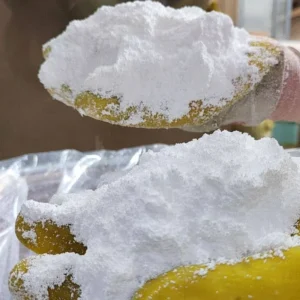
PTFE Fine Powder
Need PTFE’s higher continuous-use ceiling for hookup wire? Peflon also supplies PTFE fine powder for wire wrap and tape.
Technical Support of FEP for Cable & Wire
Specifying and running FEP wire resin raises real engineering questions — MFR and grade selection, temperature limits, extrusion settings and compliance. Our technical library shares practical, hands-on guidance from the Peflon materials team.
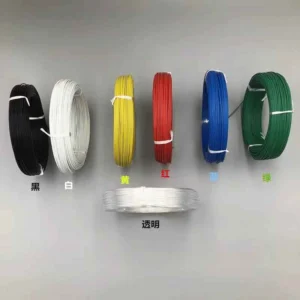
How to Choose the Suitable FEP Resin in the Wire Industry
How to match FEP grade and MFR to your wire line speed and wall thickness.
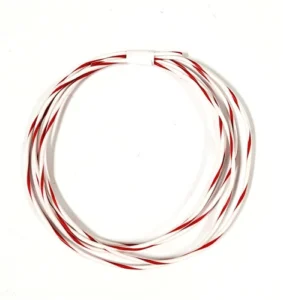
What Size PTFE Wire Is Best for Automotive Wiring?
Sizing guidance for automotive-grade fluoropolymer wire.
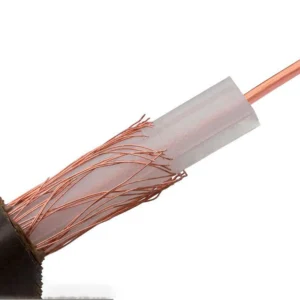
What Size Coaxial Cable for Exterior Use
Coaxial cable sizing considerations for exterior installation.
Ask for a Free FEP Wire & Cable Sample
Tell us your cable type, target MFR, wall thickness and volume — our engineers will recommend the right FEP grade, send the TDS and reply within 24 hours.