
Pre-Sintered PTFE Resin — Molding, Ram-Extrusion & Billet Grades
Peflon is a China manufacturer supplying pre-sintered PTFE free-flow resin for industrial compression molding and ram extrusion — work directly with a production-focused supplier, not a trading layer.
- Five particle-size and process-matched grades, real TDS on file for each
- Distinct product line from Peflon’s suspension molding powder — see below for which one fits your process
- REACH / RoHS documentation, samples available before you commit
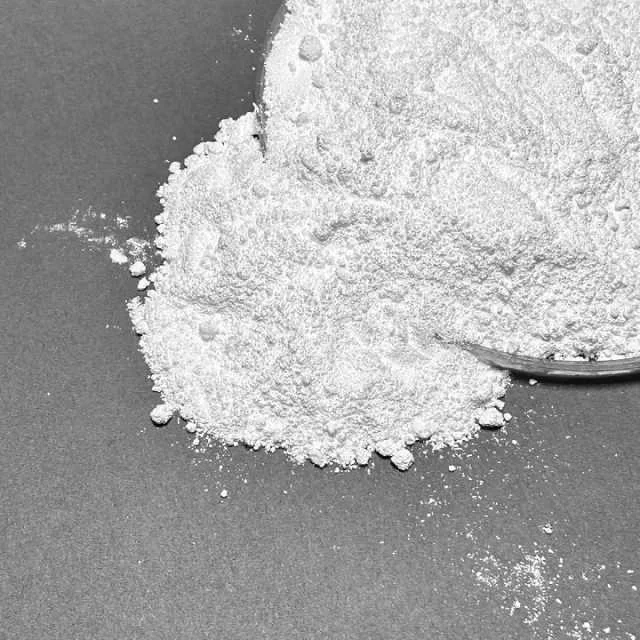
What is PTFE Pre-Sintered Resin?
Pre-sintered PTFE — also named partially sintered PTFE or PTFE free-flow resin — is polytetrafluoroethylene (PTFE, CAS 9002-84-0) resin that has undergone controlled thermal treatment before final sintering. It is typically chosen when your production relies on cold-forming steps such as compression molding or ram extrusion, where material handling and shape retention before full sintering are critical. Peflon’s grades are tested against ASTM D4894, the standard specification for PTFE granular molding and ram extrusion materials.
Because the resin is only partially sintered, it flows and compacts predictably during pressing, then completes densification in the final sinter. This is a distinct product line from Peflon’s suspension-polymerized molding powder — both are compression-molded, but pre-sintered free-flow resin is supplied further along the processing chain, with different bulk-density and flow characteristics matched to ram extrusion and automated molding lines.
PTFE Pre-Sintered Resin Properties
All five grades share a common base profile from Peflon’s TDS testing — particle size and flow/shrinkage behavior are the main variables between them (see Grade Selection below for grade-by-grade values).
| Property | Typical Value | Test Method |
|---|---|---|
| Tensile strength | 25.5–30 MPa | GB/T 1040.0, HG/T 2902 |
| Elongation at break | 290–350% | GB/T 1040.0, HG/T 2902 |
| Bulk density | 750–800 g/L | — |
| Melting point | 327 ± 5°C | HG/T 2902 |
| Standard relative density | 2.130–2.180 | — |
| Thermal instability index | ≤ 30 | — |
| Moisture content | ≤ 0% | Infrared moisture analyzer |
Pre-Sintered PTFE Grades & Data Sheets
Five pre-sintered PTFE grades — particle size and flow behavior are the main variables. Click a grade to download its Technical Data Sheet (PDF).
| Grade | Particle Size | Tensile (MPa) | Elongation (%) | Typical Application |
|---|---|---|---|---|
| PF-M1 | 200–400 µm | ≥25.5 | ≥290 | Molding rods, tubes, plates — automatic extrusion |
| PF-M2 | 401–600 µm | ≥25.5 | ≥290 | Molding rods, tubes, plates — automatic extrusion |
| PF-M3 | 601–900 µm | ≥25.5 | ≥290 | Molding rods, tubes, plates; engineering plastic additive |
| PF-FF | 450 ± 50 µm | ≥30 | ≥350 | Free-flowing powder for automated molding (Shore D 54–56, max sintering 380°C) |
| PF-P22 | 200–400 µm | ≥25.5 | ≥290 | Rods, tubes, plates — ram extrusion |
Note: typical values from Peflon’s TDS testing, data not for specification purposes — confirm final selection by processing method and end use.
Filled Pre-Sintered Grades
Eight filler types are also available in pre-sintered (“-E”) form for ram extrusion, in addition to the unfilled grades above. Not every filler has a pre-sintered variant — glass fibre + MoS₂, carbon fibre, PEEK and POB (Ekonol) are only offered as non-free-flow or free-flow powder, not pre-sintered.
| Filler | Pre-Sintered Grade(s) | Content (wt%) | Features |
|---|---|---|---|
| Glass Fibre | 15GF-E / 20GF-E / 25GF-E | 15 / 20 / 25 | Low creep, high wear resistance, good electrical properties |
| Bronze | 30BR-E / 40BR-E / 60BR-E | 30 / 40 / 60 | Low creep, high thermal conductivity, high hardness |
| Coke Powder | 15CAR-E / 25CAR-E | 15 / 20 | Low creep, high wear resistance, high PV value |
| Graphite | 15GR-E | 15 | Low friction, low creep, corrosion resistance |
| Glass Fibre + Graphite | 15GF5GR-E | 15 + 5 | High wear resistance, low friction, low creep |
| Alumina (Al₂O₃) | 7AL-E / 15AL-E | 7 / 15 | High-voltage insulation |
| Stainless Steel Powder | 25STST-E / 50STST-E | 25 / 50 | High dielectric strength, low cold flow, high thermal conductivity |
For full filler selection guidance across all three powder forms (non-free-flow, free-flow and pre-sintered), see Peflon’s Modified PTFE grade list.
Application of PTFE Pre-Sintered Resin
Used across seals, bearings, electrical insulation, chemical-processing equipment, and the food and pharmaceutical industries.
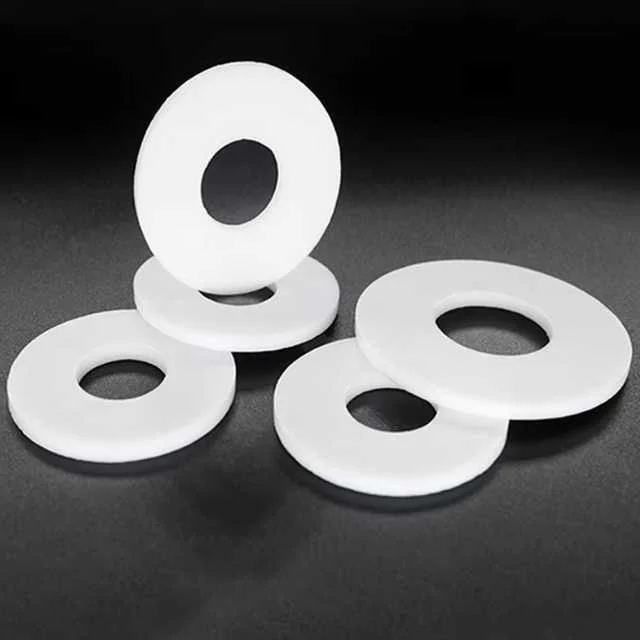
Gaskets
Sealing of reactors, pipes and valves — a common application area tracked by the Fluid Sealing Association, the North American trade body for sealing-product manufacturers.
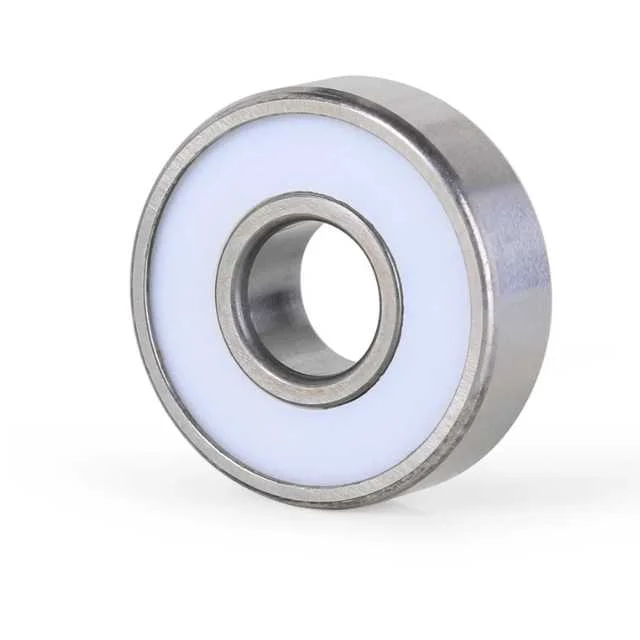
Bearings
Improved durability and performance as a bearing material in automotive components.
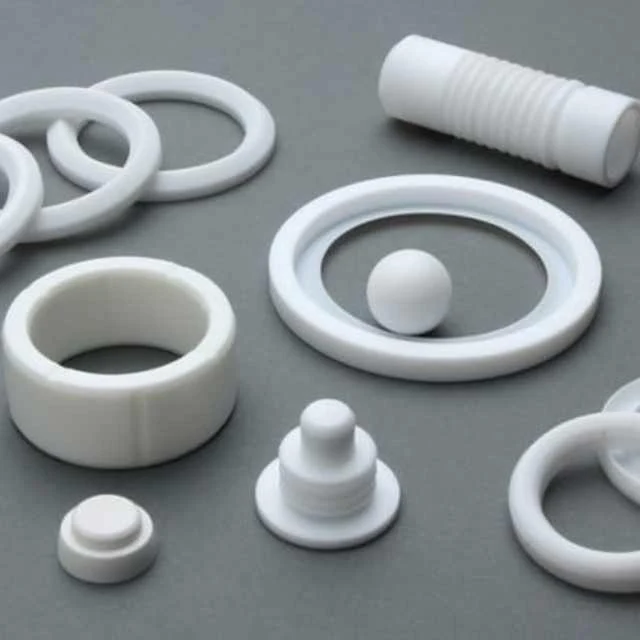
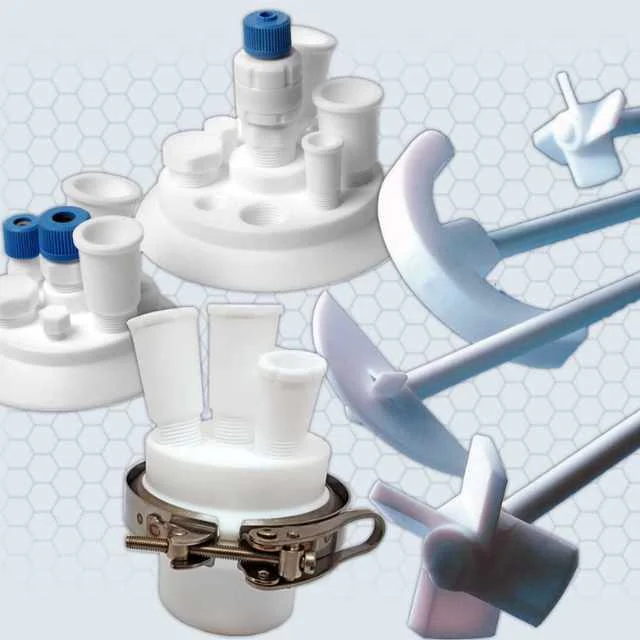
Chemical Processing Equipment
Lining and sealing of chemical reactors to prevent leakage.
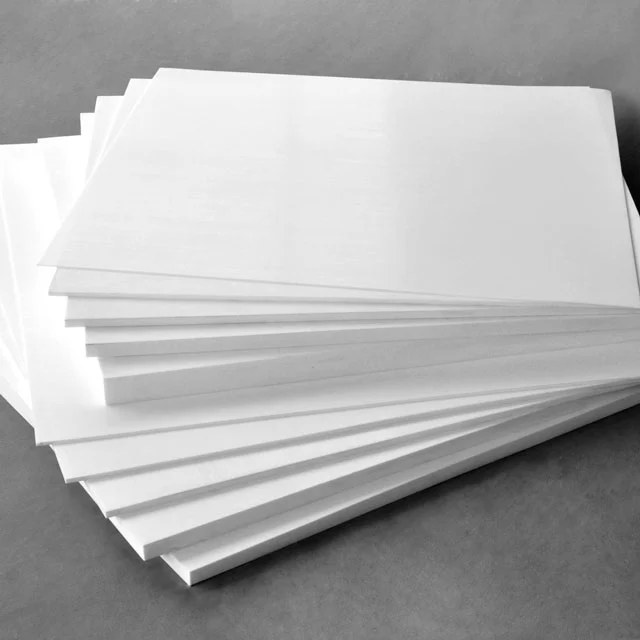
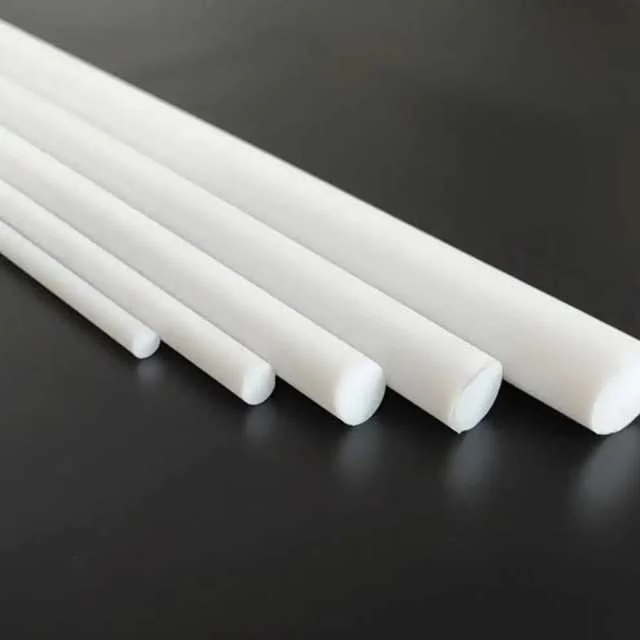
PTFE Pre-Sintered Resin Processing
Processing of PTFE pre-sintered compounds includes dry pressing, hot-press molding, sintering and post-processing — matched to the grade’s particle size and flow behavior.
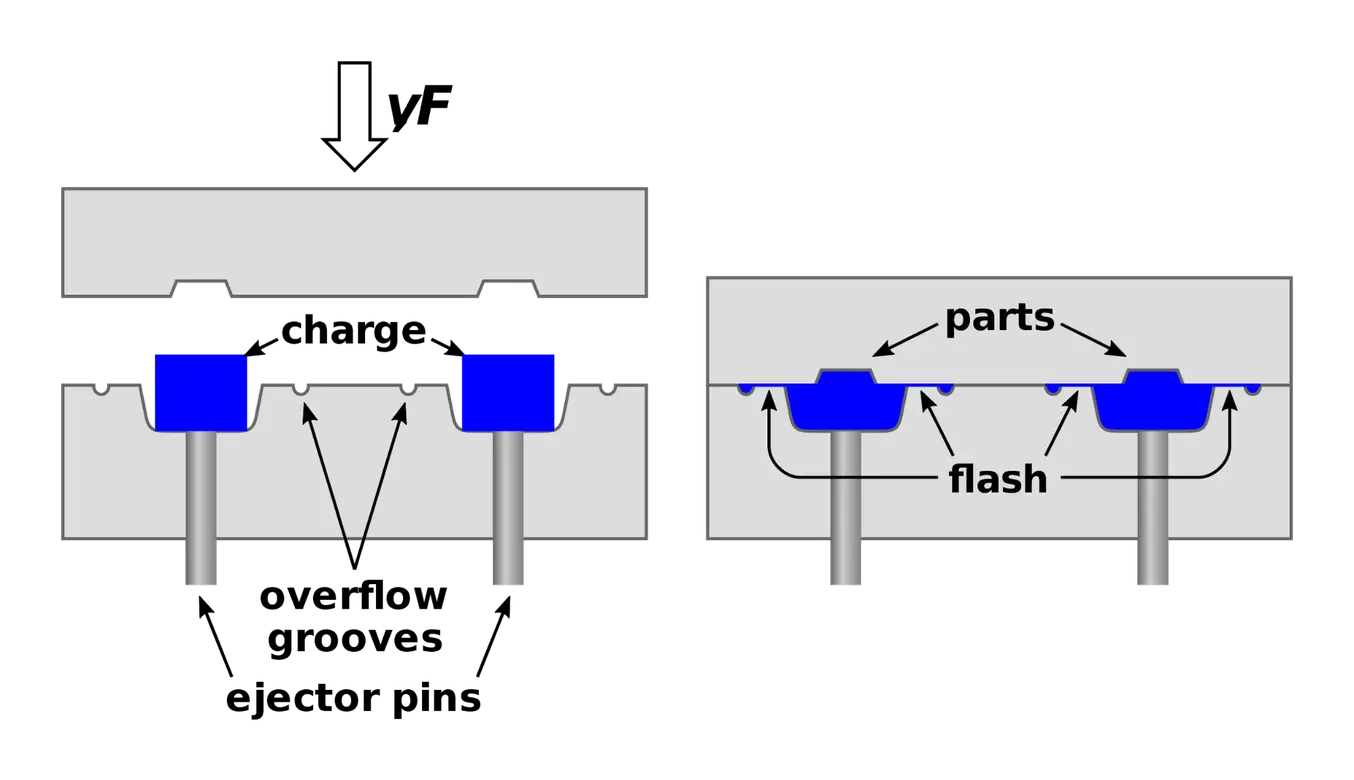
Compression Molding
Processors dry-press pre-sintered PTFE powder in a mold under pressure, then sinter above 327°C to fuse the particles into a dense, void-free billet or sheet.

PTFE Compression Molding Process
High-pressure shaping of pre-sintered PTFE resin in molds — precise parts with exceptional chemical resistance and durability.
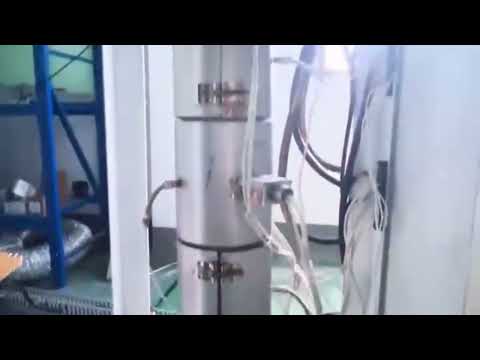
PTFE Ram Extrusion Process
Powder is pressed, heated and extruded, then cooled, demolded, cut and QC’d — continuous rod and tube profiles with uniform density.
PTFE Pre-Sintered Resin Chemical Compatibility
Pre-sintered PTFE shares PTFE’s essentially universal chemical resistance — the exceptions below are the rare cases worth flagging before you finalize a spec.
| Chemical | Class | Resistance |
|---|---|---|
| Sulfuric, hydrochloric, nitric, hydrofluoric acids | Mineral acid | Excellent, full concentration range |
| Sodium hydroxide (40%) | Strong base | Excellent |
| Acetone, methanol, toluene | Solvent | Excellent |
| Chlorinated solvents | Chlorinated solvent | Excellent |
| Molten alkali metals | — | Not recommended, any temperature |
| Elemental fluorine | — | Not recommended above 300°C |
| Certain fluorinated solvents under pressure | — | Limited above 200°C |
Why Choose Peflon Pre-Sintered PTFE Resin
Buyers evaluating a new pre-sintered PTFE source usually care less about a supplier having “lots of grades” and more about avoiding two costly failure modes: a batch that turns out to be reprocessed/recycled powder instead of virgin resin, and a grade mismatch that only shows up after an hours-long sinter cycle has already run.
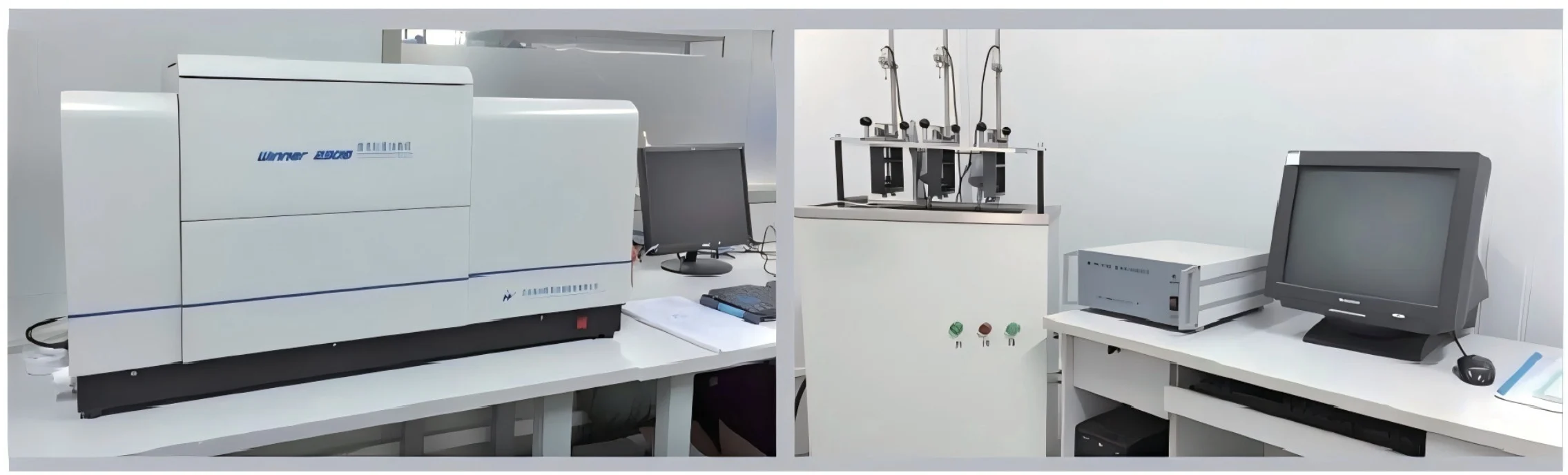
Traceable, Virgin-Only Pre-Sintered Resin
Pre-sintered powder’s biggest quality risk is virgin resin getting mixed with reprocessed/recycled powder — it changes flow and shrinkage behavior in ways that are hard to catch before you press a billet. Peflon supplies virgin-only pre-sintered grades with batch-level traceability from raw resin to finished bag.
- Per-batch tensile/elongation/particle-size testing on file, not generic datasheets
- No reprocessed or reground resin blended into pre-sintered grades
Grade Match to Cut Shrinkage & Scrap
Billets are typically pressed 3–5% oversized to allow for sintering shrinkage, and the offcut from machining to final size is scrap you’re paying for. Matching particle size and bulk density to your press or extruder up front — not after a failed run — is what keeps that shrinkage allowance predictable instead of a moving target.
- Particle size (200–900 µm across PF-M1/M2/M3) matched to your billet size and forming route
- Filled variants (glass/bronze/graphite/carbon/alumina/stainless, “-E” suffix) available for wear- or creep-critical parts
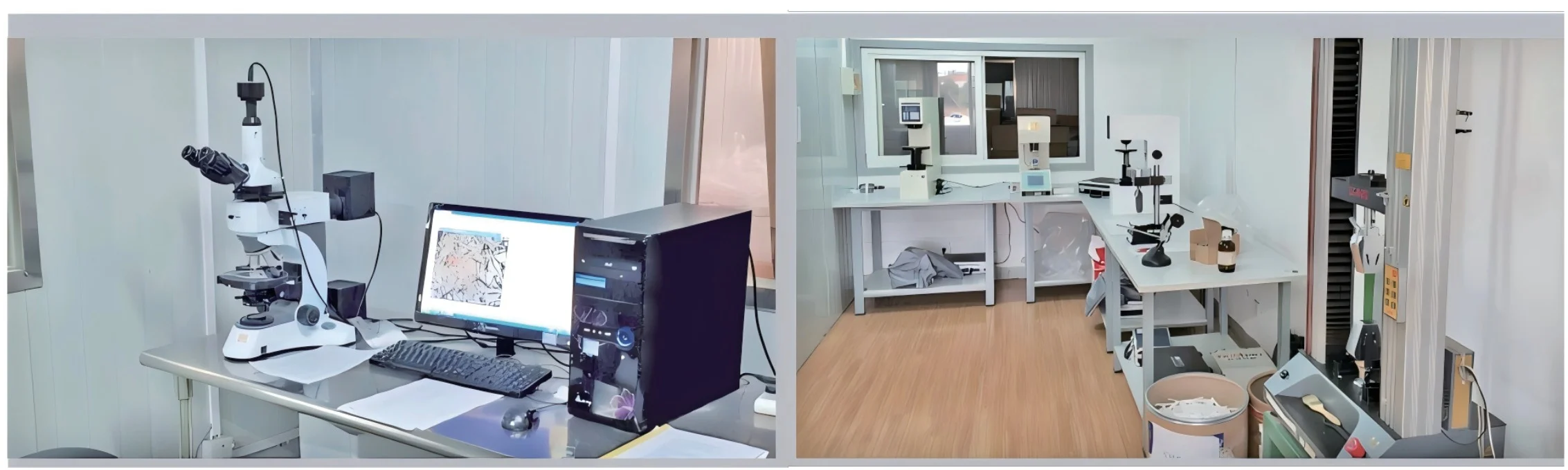
Validate Before a Full Sinter Cycle, Not After
A sinter cycle can run anywhere from a few hours to a full day depending on billet size — discovering a grade mismatch after that cycle is expensive. Trial samples let you confirm flow, compaction and sintering behavior on your own press before committing to a production order.
- Samples shipped with the matching TDS
- Technical review of your application against grade-specific data before you order
Certified & Compliant Supply
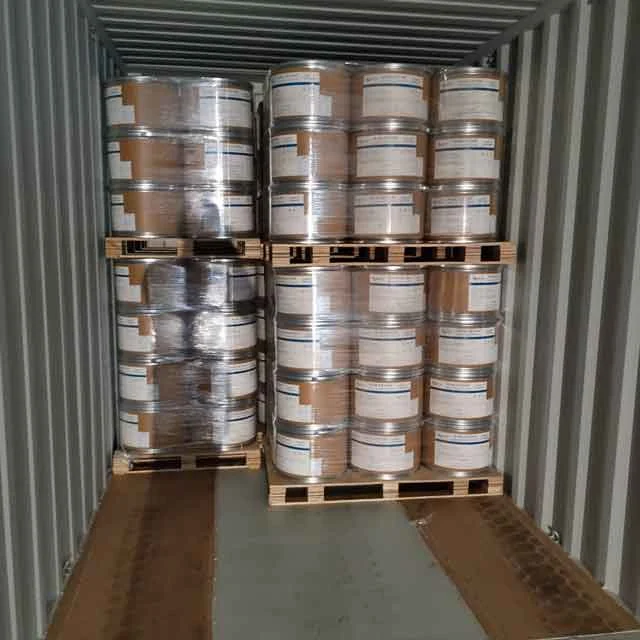
ISO-certified quality management with REACH and RoHS documentation on file, backed by predictable 25 kg-bag packaging for repeat and scale-up orders.
- REACH / RoHS documentation on file
- Standard 25 kg bag, palletized for container loading
Pre-Sintered PTFE — Frequently Asked Questions
What is the difference between pre-sintered PTFE and fully sintered PTFE?
Pre-sintered PTFE is supplied before final sintering, so you can shape or form it first — compression molding, ram extrusion or billet pressing — then complete the thermal cycle. Fully sintered PTFE has already been densified and is used as finished or semi-finished stock.
Is pre-sintered PTFE suitable for melt processing?
No. PTFE (including pre-sintered grades) is not melt-processable. It is cold-formed under pressure, then sintered above ~360°C to fuse the particles into a dense part.
Which forming routes use pre-sintered PTFE?
Compression molding (PF-M1/M2/M3 for sheet, billet, large shapes), ram extrusion (PF-P22 for rod and continuous profiles) and automated molding (PF-FF free-flow powder). Choose the grade that matches your press or extruder and target density.
Can pre-sintered PTFE be filled with glass, carbon or bronze?
The five grades above are unfilled base resin. For glass, carbon, graphite or bronze-filled PTFE compounds, see Peflon’s modified PTFE overview or the dedicated glass-filled, graphite-filled and bronze-filled PTFE lines.
How should pre-sintered PTFE be stored and handled?
Store in clean, dry, cool conditions away from contamination before forming, since particle cleanliness and moisture directly affect part quality. Handle to match your forming and sintering workflow.
Related Products of Pre-Sintered PTFE Resin
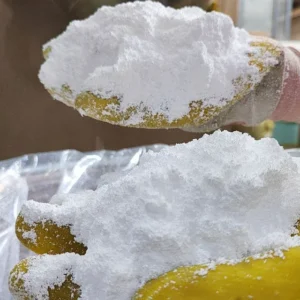
PTFE Molding Powder
Need suspension-polymerized granular resin straight for compression molding, not pre-sintered free-flow stock? Peflon also supplies PTFE molding powder.
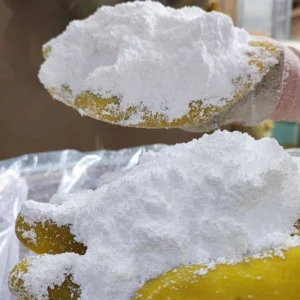
What is PTFE
New to PTFE or comparing raw-material forms? See Peflon’s full PTFE material overview.
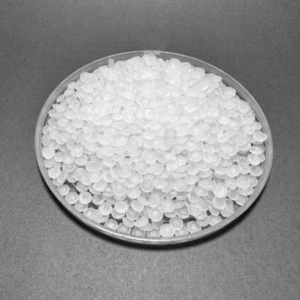
PFA Material Supplier | Peflon
Need melt-processability instead of cold-forming? Peflon also supplies PFA, extending to 260°C with full melt processing.
Technical Support of Pre-Sintered PTFE
Selecting and forming pre-sintered PTFE raises real engineering questions — grade choice, pressing pressure, sintering schedule and filler selection. Our technical library shares practical, hands-on guidance from the Peflon materials team.

PTFE: How to Select the Right Grade
How to match particle size and flow behavior to your press or extruder before you order.

What is Compression Molding?
The fundamentals of compression molding for PTFE and other engineering plastics.
Compression Molding Basics: What You Need to Know
Common press-cycle and billet-sizing mistakes buyers run into with compression molding.
Get a Custom Pre-Sintered PTFE Grade
Tell us your forming route — compression molding, ram extrusion or automated molding — plus part size and target density. Our engineers will match a grade, send the TDS and reply within 24 hours.