
PTFE Block, Billet & Thick Molded Plate
Compression-molded PTFE stock — blocks, billets and thick plate up to 600 mm thick (plate to 700×600 mm) — in virgin and filled grades, machined to your drawing. Made by a PTFE raw-material producer, so quality is controlled from powder to part.
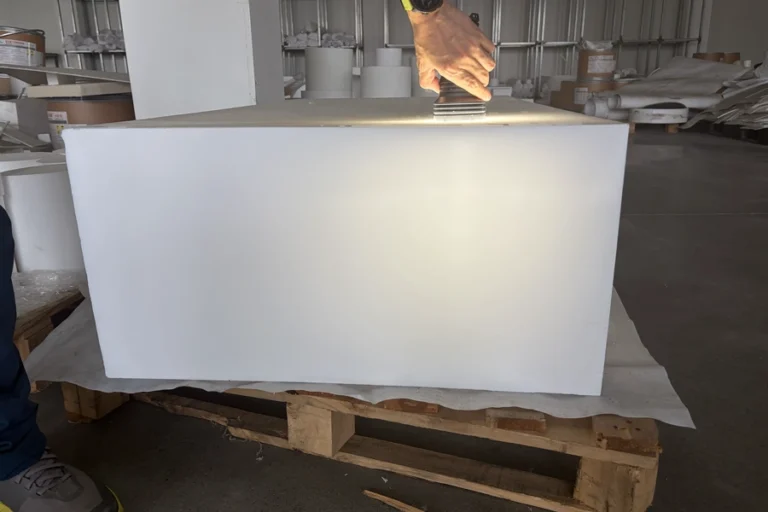
What Are PTFE Blocks, Billets & Thick Plate?
PTFE blocks, billets and thick plate are compression-molded, sintered stock shapes machined into finished parts. Peflon molds them up to 600 mm thick, plate to 700×600 mm, in virgin and filled grades, machined to ±0.1 mm. Billets are round molded stock, blocks are rectangular, plate is a flat block at a set thickness.
Grades run from virgin PTFE to glass-, bronze-, graphite-, carbon- and MoS₂-filled and modified PTFE, so wear, creep and thermal behaviour can be tuned to the application. Because we also produce the PTFE resin and molding powder, material is traceable from powder to finished block.
Key terms:
- Billet — round molded PTFE stock, machined into parts.
- Sintering — heating molded PTFE to 360–380 °C so particles fuse; the slow ramp prevents cracks in thick sections.
- Cold flow (creep) — PTFE’s slow deformation under constant load; reduced by fillers and modified PTFE.
Last updated: July 2026
Virgin Vs. Filled PTFE Block: Which to Choose
| Property | Virgin PTFE | Glass-filled | Bronze-filled | Graphite / Carbon |
|---|---|---|---|---|
| Wear resistance | Low | Improved | High | High |
| Creep / cold flow | Higher | Much lower | Lower | Lower |
| Thermal conductivity | Low | Low | High | Higher |
| Chemical purity | Best | Good | Reduced | Good |
| Best for | Semiconductor, chemical, food-contact | Structural seals & guides | Bearings & wear pads | Dry-running & high-PV wear |
PTFE Blocks by Grade
Pick by grade (wear, load, purity) or jump to your industry.
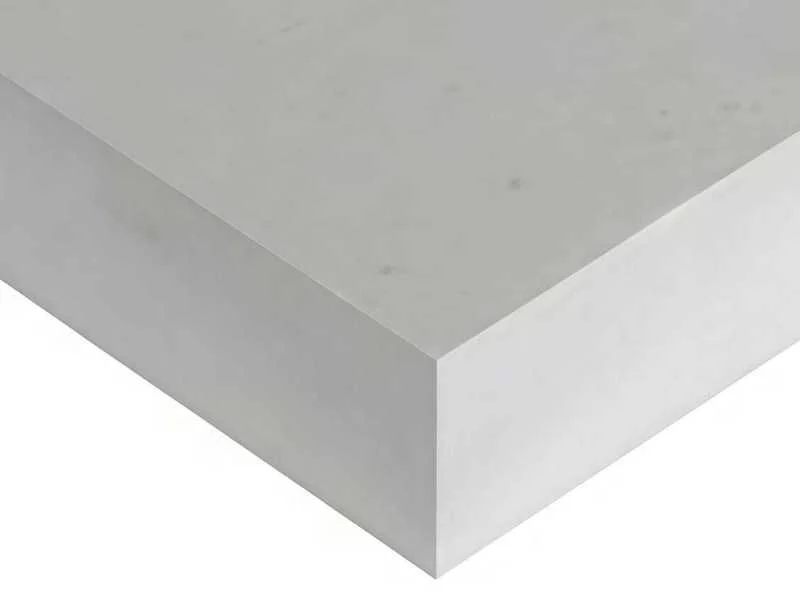
Glass-filled PTFE Block
Higher compressive strength and lower creep — for structural seals and guides.
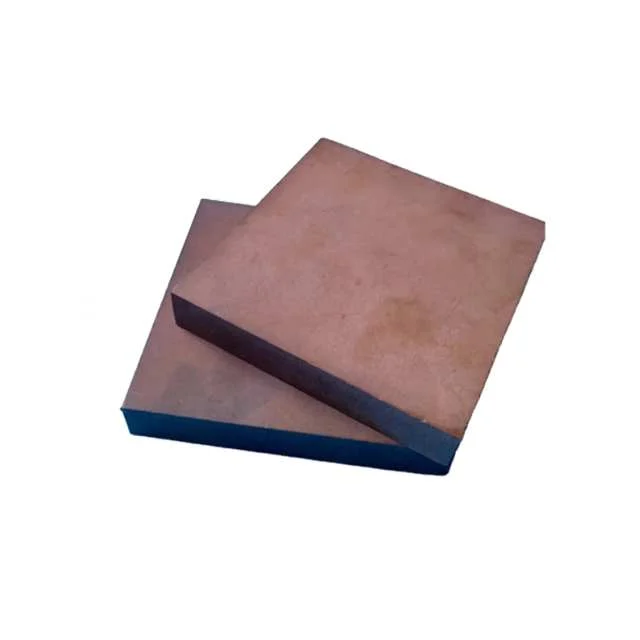
Bronze-filled PTFE Block
Wear resistance and thermal conductivity — for bearings and wear pads.
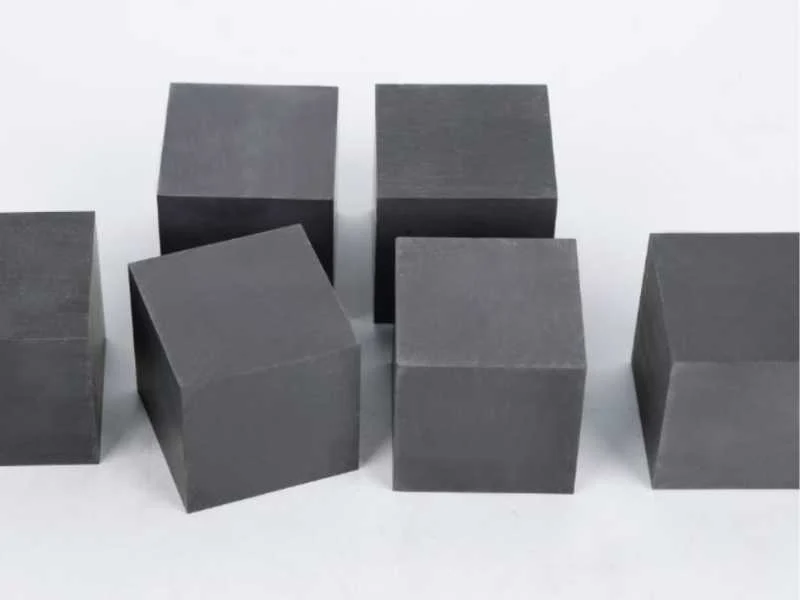
Graphite & Carbon PTFE Block
Low friction and dimensional stability — for dry-running, high-PV parts.
How We Make Crack-free 600 Mm Blocks
Ultra-thick PTFE fails if heated or cooled too fast — the core traps thermal stress and cracks or ends up low-density. Our process is built around a slow, controlled cycle.
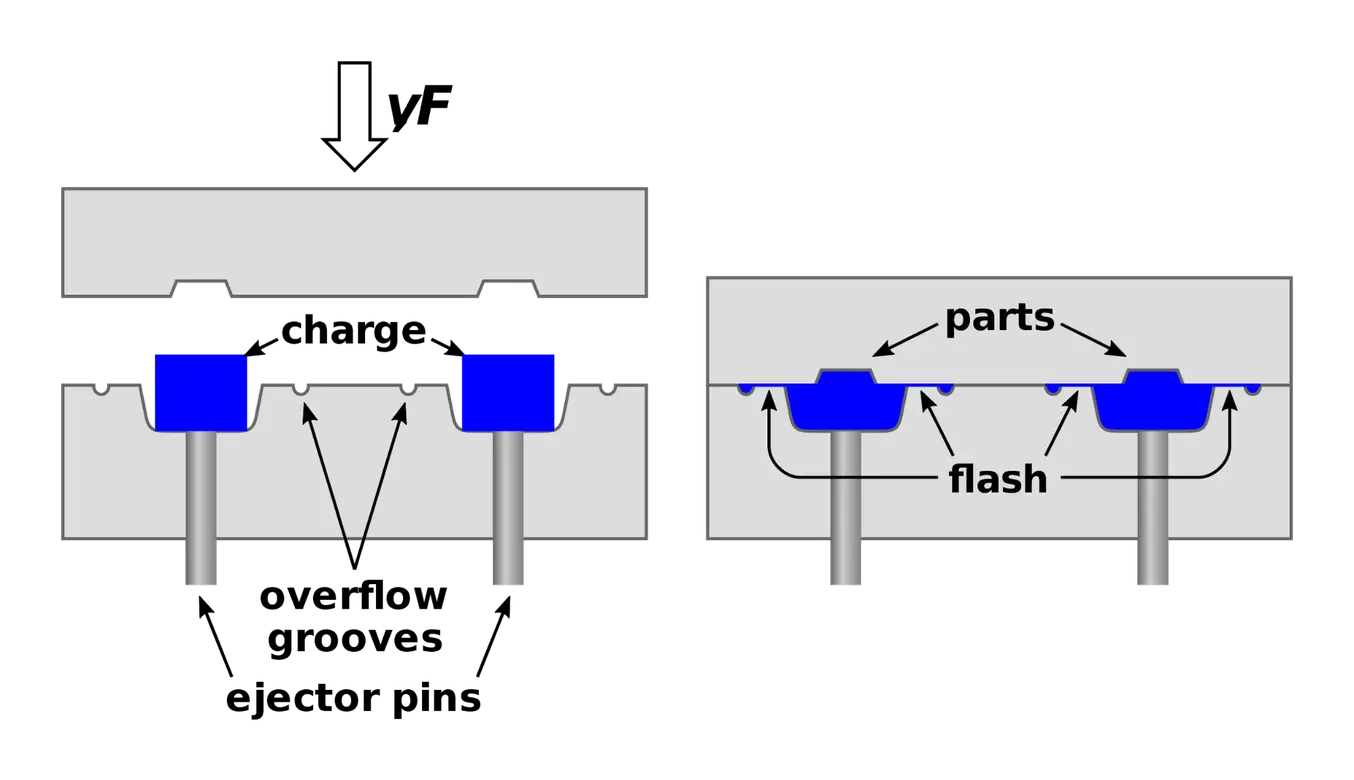
Compression Molding
Virgin or filled PTFE powder is evenly charged and pressed into a billet or block preform — even distribution sets the final density.
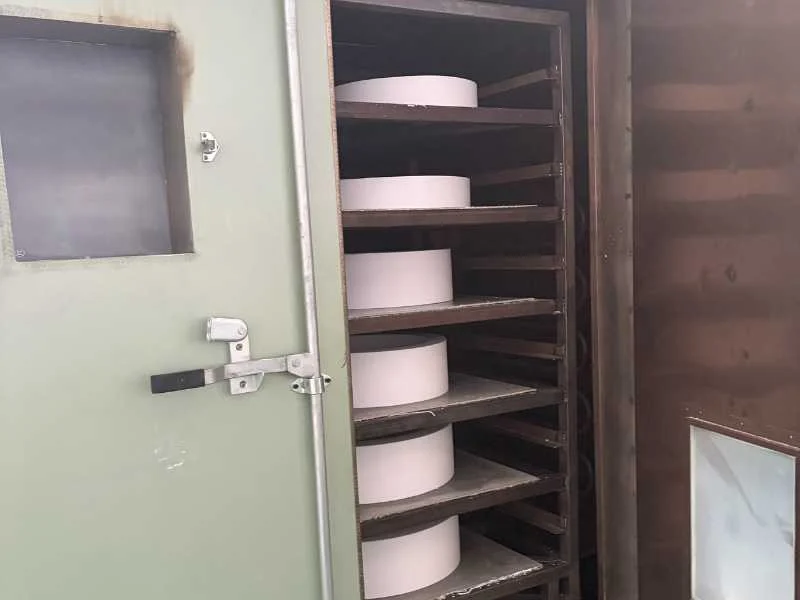
20–30 Day Precision Sintering
A programmed heat-up, soak at 360–380 °C and slow cool over 20–30 days let core and surface crystallize uniformly — crack-free, even density.
`
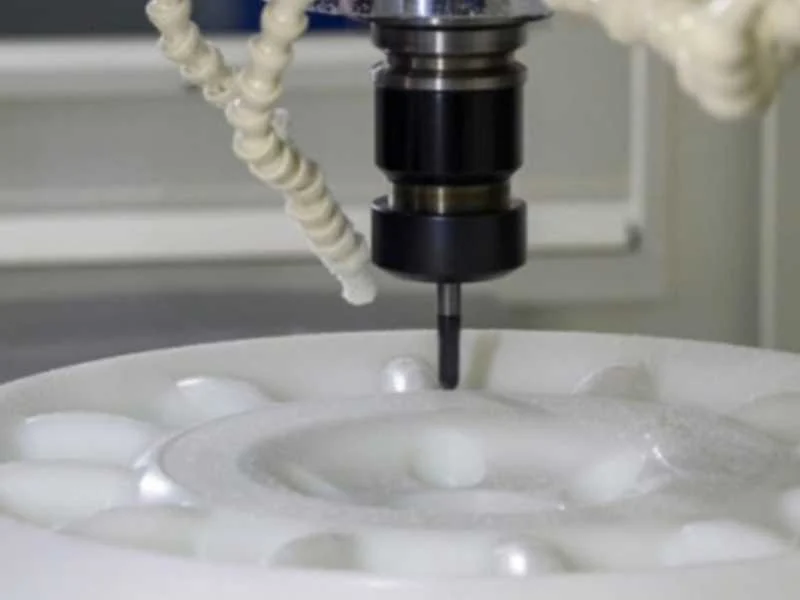
Machining & QC
Finish-machined to ±0.1 mm, flatness ≤0.2 mm/100 mm after stress-relief annealing, inspected and shipped with a COA.
Crack-free Thick Blocks, from Powder to Part
Raw Material to Finished Block
We make our own PTFE resin and molding powder and mold them in-house — traceable material, one supplier from powder to part, no channel conflict.
Certified & Documented
ISO 9001, PFOA-free, with REACH, RoHS and FDA 21 CFR 177.1550 compliance and a per-batch Certificate of Analysis.
Sample → Pilot → Production
Typical lead times: sample block ~7–10 days, pilot ~15–20 days, production ~25–30 days. Confirm MOQ and lead time for your size.
Frequently Asked Questions
How thick can a PTFE block or plate be?
Peflon molds PTFE blocks and plate up to 600 mm thick, with plate up to 700 mm wide by 600 mm long. Thinner gauges are stocked in all common market sizes.
What is the difference between a PTFE block, billet and plate?
They are the same molded stock in different shapes: billets are round, blocks are rectangular, and plate is a flat block cut or molded to a given thickness.
Why does a 600 mm PTFE block take 20–30 days to make?
Thick PTFE must be heated to the sintering point and cooled very slowly so core and surface crystallize uniformly. A fast cycle traps thermal stress and causes cracking or a low-density core.
Can thick PTFE blocks be filled or modified?
Yes — glass, bronze, graphite, carbon, MoS₂ and modified PTFE grades are available to improve wear, creep resistance and thermal behaviour.
Are these suitable for semiconductor applications?
Yes. High-purity virgin and modified PTFE blocks with uniform density are used for semiconductor wafer-handling and fluid-handling components.
What tolerance and flatness can you hold?
Machined thickness to ±0.1 mm (tighter on request), and flatness to ≤0.2 mm per 100 mm after stress-relief annealing.
What certifications and documents do you provide?
Production runs under ISO 9001 and is PFOA-free, with REACH, RoHS and FDA 21 CFR 177.1550 compliance, plus a per-batch COA, TDS and SDS on request.
What is the MOQ and lead time?
Typical lead times: sample block ~7–10 days, pilot batch ~15–20 days, production ~25–30 days; MOQ depends on size and grade — contact us with your dimensions.
Send Us Your Thickness, Size and Grade — We’ll Quote It.
Thick PTFE blocks, billets and plate up to 600 mm, virgin or filled, machined to your drawing.