
PTFE Dispersion Manufacturer & Supplier — Aqueous PTFE Emulsion, PFOA-Free
Peflon supplies water-based PTFE dispersion to coaters, fabric impregnators and formulators — a grade range for non-stick topcoat, primer, fiberglass impregnation and anti-drip use, each with its own TDS on file.
- Seven grades, 58–62% solids, 0.12–0.4 µm particle size — matched to your coating or impregnation line
- Grade cross-reference against general-purpose dispersions such as Teflon™ PTFE DISP 30 — send us your current TDS
- KKDIK / REACH documented, FDA 21 CFR 177.1550 statements on food-contact grades — trial samples available before you commit
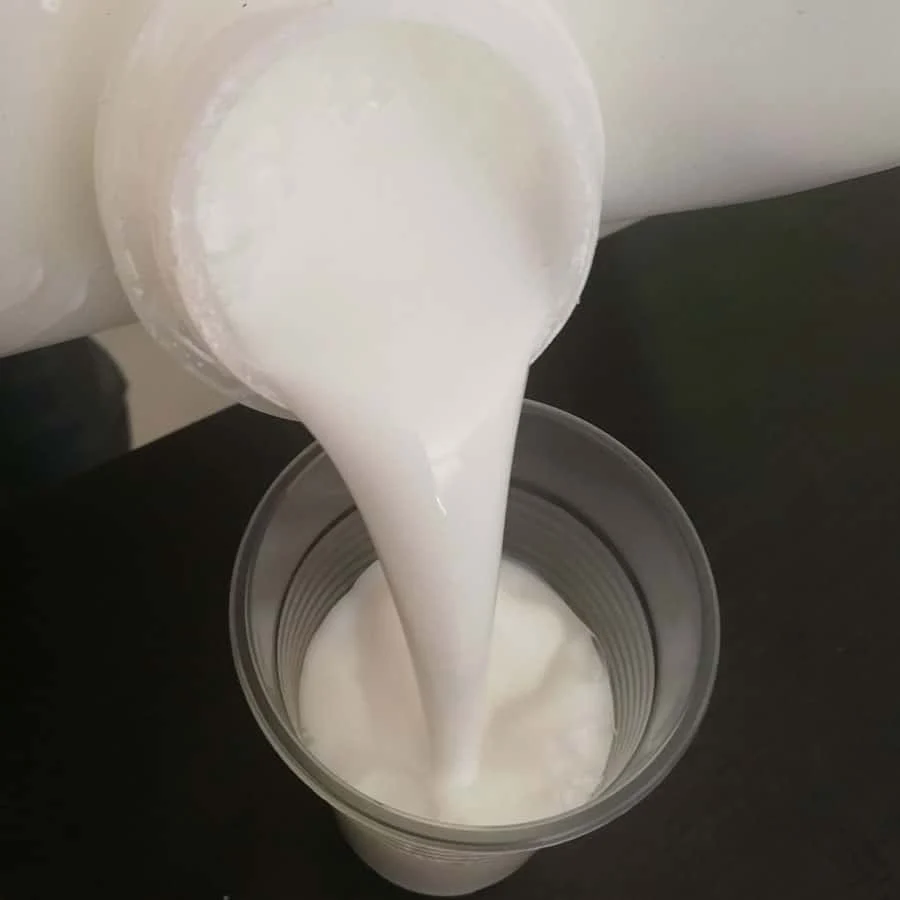
What is PTFE Dispersion?
PTFE dispersion — also called PTFE aqueous dispersion or PTFE emulsion — is a water-based system in which fine polytetrafluoroethylene (PTFE, CAS 9002-84-0) particles are suspended with a surfactant. It is chosen when your process needs liquid application — dip, flow, spray or roll coating and fabric or packing impregnation — rather than a solid PTFE form. Once dried, baked and sintered, the film is the same PTFE polymer as bulk resin. Peflon reports solid content and surfactant content by the test methods of ASTM D4441, the standard specification for aqueous dispersions of PTFE.
Peflon supplies the dispersion; coaters, glass-fabric impregnators, packing makers and compounders apply it on their own lines. For safe-handling and regulatory background on PTFE and other fluoropolymers, see the guidance published by the Fluoropolymers Product Group of PlasticsEurope.
PTFE Dispersion Properties
Typical values from Peflon’s TDS for the seven grades below — solid content, surfactant, pH and viscosity are the parameters that decide whether a grade fits your line. Data is typical, not for specification purposes.
| PTFE Dispersion Property | Typical Value / Range | Notes |
|---|---|---|
| Appearance | White or yellowish milky liquid | All grades |
| Solid content (PTFE, wt%) | 58–62% (60 ± 2% for most grades) | ASTM D4441 |
| Surfactant content | 4–7% | ASTM D4441 |
| pH | 8–10 (PF-FR301KH/W 8.5–10.5; PF-DH 8–11) | ASTM E70; keep opened containers at pH 8–10 |
| Viscosity, 25°C | ~10–100 mPa·s depending on grade | ASTM D2196; see grade table |
| Particle size | 0.12–0.4 µm depending on grade | Grades with a stated value in the TDS |
| Melting point of sintered resin | 327 ± 10°C | PF-FR301KH/W TDS, HG/T 2902 |
| Standard specific gravity of sintered resin | 2.15–2.27 | PF-FR301KH/W TDS, GB/T 1033.1 |
| Service temperature of PTFE resin | Continuous to 260°C (500°F) | General PTFE property; per Chemours PTFE DISP 30 product sheet |
| Storage | Optimum 15–25°C; avoid >40°C; protect from freezing | Freezing causes irreversible settling |
| Package | 25 kg drum; IBC 1,350–1,400 kg | Per grade TDS |
PTFE Dispersion Grades & Data Sheets
Seven PTFE dispersion grades — pick by process, not by price. Solid content is 60 ± 2% unless noted. Click a grade to download its Technical Data Sheet (PDF).
| Grade | Particle Size | Viscosity | Typical Application (per TDS) | Compliance Statements (per TDS) |
|---|---|---|---|---|
| PF-DD | 0.2–0.4 µm | 15–40 mPa·s | Glass-fiber impregnation; coating material for various substrates | EU statement: no SVHC >0.1%, RoHS 2011/65/EU, not CLP-classified |
| PF-DF | Not stated | 10–100 mPa·s | Glass-fiber impregnation; high-grade non-stick coatings (PFOA-free) | EU statement: no SVHC >0.1%, RoHS 2011/65/EU, not CLP-classified |
| PF-DW | Not stated | 10–50 mPa·s | Non-stick cookware topcoat (PFOA-free); primer, mid-coat and topcoat in water-based fluoropolymer systems | REACH SVHC pass; FDA 21 CFR 177.1550; RoHS 2015/863; PFAS-compliant (free from 545 regulated PFAS substances) |
| PF-DP | 0.12–0.25 µm | 7–10 mm²/s | Non-stick prime coating (PFOA-free); PTFE spinning | REACH SVHC pass; FDA 21 CFR 177.1550; RoHS 2015/863; PFAS-compliant (free from 545 regulated PFAS substances) |
| PF-DT | Not stated | 15–75 mPa·s | Non-stick coating needing high brightness, high adhesion and high film-forming | SGS, RoHS, REACH and SVHC certificates |
| PF-DH | 0.15–0.25 µm | 10–40 mPa·s | High-solids concentrate (58–62%) for formulation, dilution, coating and impregnation | RoHS, REACH and SVHC certificates |
| PF-FR301KH/W | Not stated | 10–50 mPa·s | Modified, PFOA-free: anti-drip agents, fiber and glass-fiber fabric coating, industrial coating formulations, PTFE composites | REACH SVHC pass; FDA 21 CFR 177.1550; RoHS 2015/863; PFAS-compliant (free from 545 regulated PFAS substances) |
Notes: the FDA statement (21 CFR 177.1550) appears on the PF-DW, PF-DP and PF-FR301KH/W data sheets only. “Free from 545 regulated PFAS substances” describes a list of regulated substances, not the polymer: PTFE is itself a fluoropolymer, which falls within the broad OECD/EPA PFAS definition — see Is PTFE a PFAS?
Applications of PTFE Dispersion
Coaters, glass-fabric impregnators, packing makers and compounders buy the dispersion and apply it on their own lines — Peflon supplies the raw material, not a coating service. Coated glass fabric is covered by ASTM D4969, the specification for PTFE-coated glass fabric.
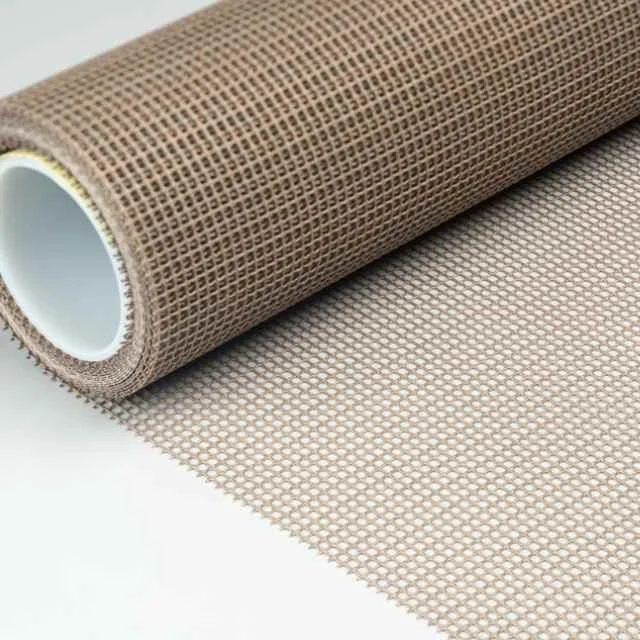
Coated Fiberglass Fabric
Fabric impregnators pass woven glass cloth through a dispersion bath to build a PTFE coating for insulation tape, release fabrics and industrial belting. Needs good wetting and penetration — see PF-DD.
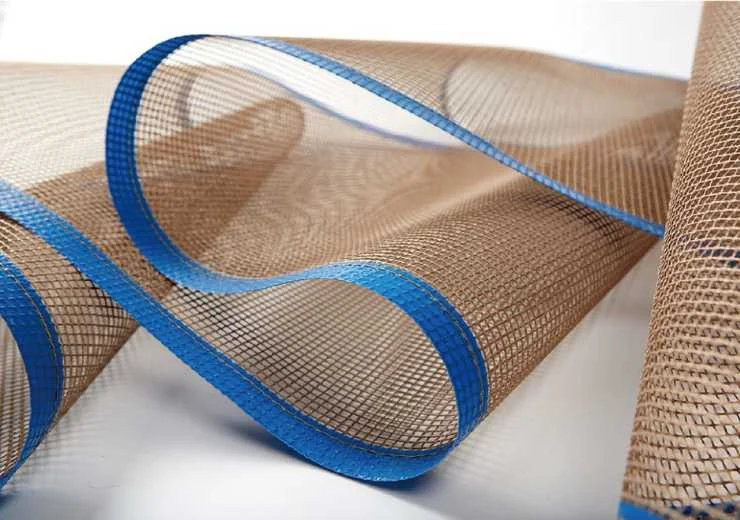
PTFE Mesh & Conveyor Belts
Open-weave glass mesh is impregnated with PTFE for baking, drying and filtration belts that shed sticky product and tolerate high temperature.

Architectural Membranes
Coated glass-fabric tensile membranes for roofs and canopies use a PTFE-impregnated fabric for weatherability and self-cleaning surfaces.
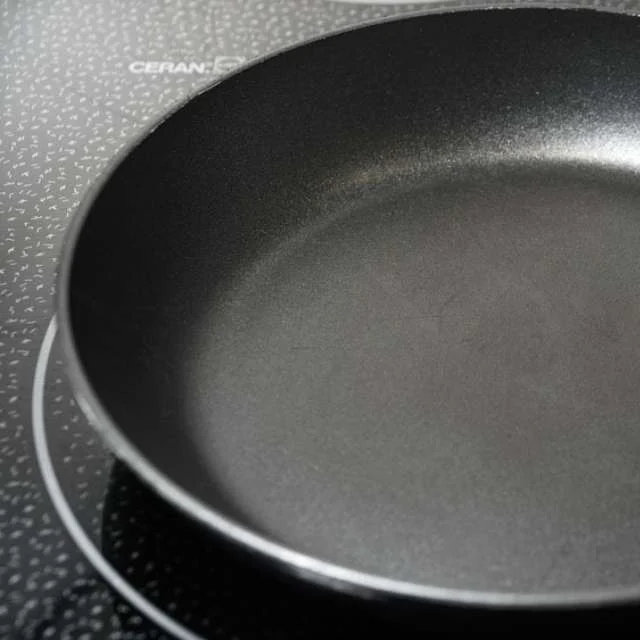
Non-Stick Cookware & Bakeware
Coating manufacturers use PTFE dispersion as the topcoat, and PF-DP/PF-DW-type grades in primer and mid-coat layers, on cookware and bakeware.
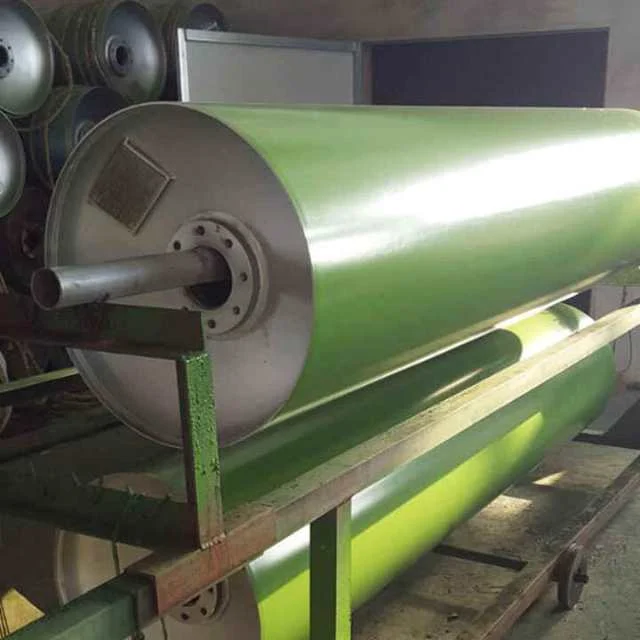
Industrial & Roll Coatings
Industrial coaters apply PTFE dispersion to rollers, hoppers and metal parts for low-friction, release and chemical-resistant surfaces.
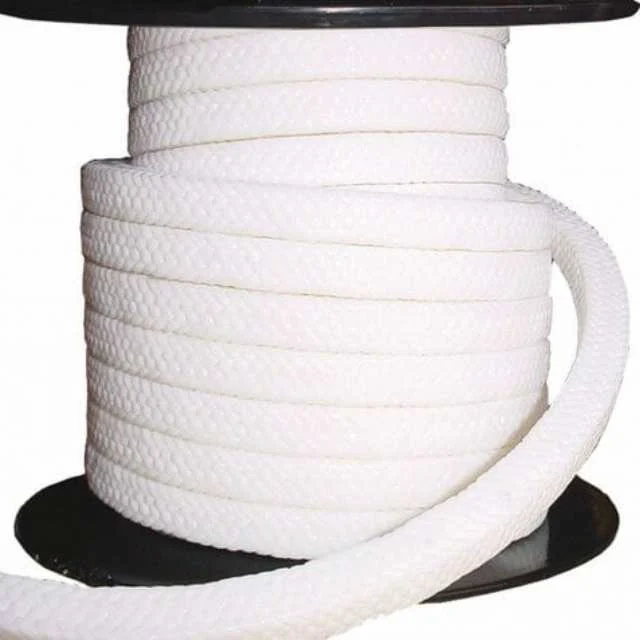
Gland Packing
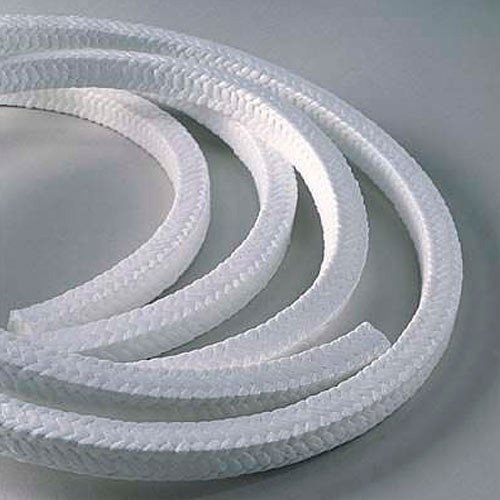
Packing makers impregnate braided yarn with PTFE dispersion so small particles penetrate the fibers and stay in service under compression, steam and chemicals.
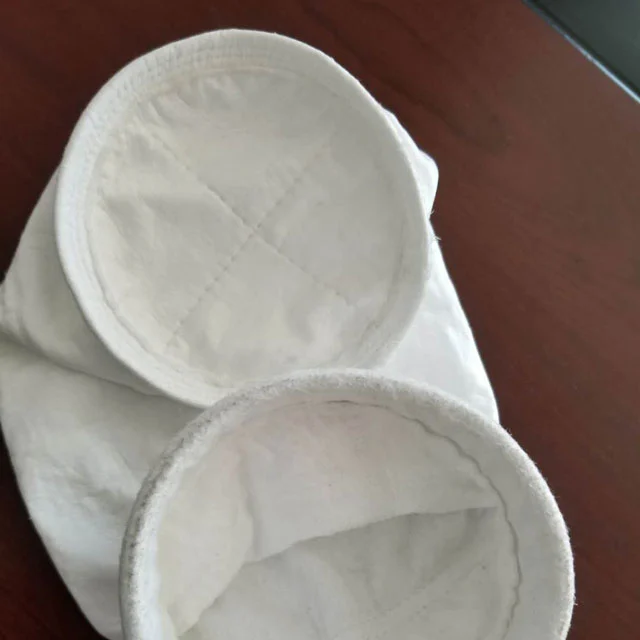
Hot-Gas Filtration Fabric
Unmelted PTFE particles left in woven filter fabric improve flexibility and flex life in hot-gas filtration service.
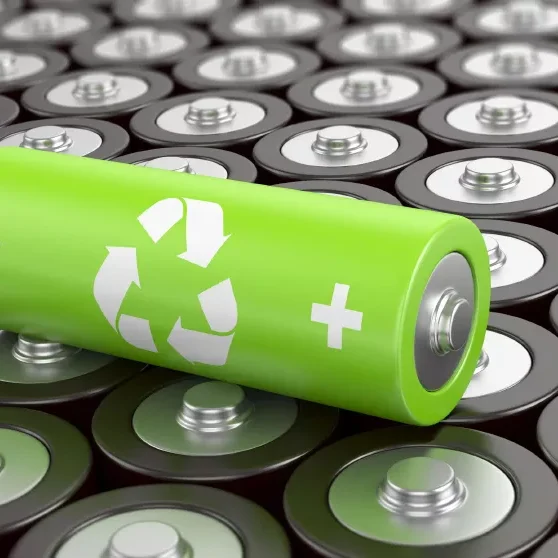
Battery Electrode Binder
Battery makers use PTFE dispersion as a binder for anode or cathode matrices; listed in Peflon’s SDS recommended uses.
Anti-Drip Additive
Compounders use PTFE dispersion-based additives to stop melt dripping in flame-retardant plastics; PF-FR301KH/W is listed for anti-drip use.
How Processors Apply Peflon PTFE Dispersion
Coaters and impregnators run the same three stages whatever the substrate: dry the water off (roughly 80–120°C), bake out the surfactant (roughly 200–270°C), then sinter above PTFE’s ~327–337°C melting point — commonly 380–420°C — so the particles coalesce into a continuous film. Multiple thin passes build thickness without mud-cracking.
Dip & Flow Coating of Fabrics
Processors dip or flow-coat glass, aramid or other high-temperature fabrics in several passes, drying and baking each layer, to reach a smooth, crack-free PTFE coating.
Spray & Roll Coating of Metal
Coaters spray or roll primer, mid-coat and topcoat onto prepared metal in a multi-coat, multi-bake sequence; viscosity and particle size set flow, gloss and film formation.
Yarn & Packing Impregnation
Packing makers pass braided or twisted yarn through the dispersion so it wets internal surfaces and the fine particles penetrate the fibers, then dry and bake without full sintering.
PTFE Dispersion Chemical Resistance
Sintered PTFE resists nearly all industrial chemicals and solvents — the exceptions below are the cases worth checking before you specify a coated part.
| Chemical | Class | Resistance |
|---|---|---|
| Sulfuric, hydrochloric, nitric, hydrofluoric acids | Mineral acid | Excellent |
| Sodium hydroxide, potassium hydroxide | Strong base | Excellent |
| Acetone, methanol, toluene | Solvent | Excellent |
| Chlorinated solvents | Chlorinated solvent | Excellent |
| Molten alkali metals | — | Not recommended |
| Elemental fluorine at high temperature | — | Not recommended |
Why Choose Peflon PTFE Dispersion
Buyers qualifying a new PTFE dispersion source already have a line running on a specific grade — the question is whether a new grade’s parameter window drops into that process without a reformulation cycle.
Checked Against DISP 30’s Published Values
Chemours’ Teflon™ PTFE DISP 30 is the general-purpose dispersion many coating and impregnation lines are qualified on: about 60% solids, 6% surfactant, 0.22 µm particle size and 25 mPa·s viscosity. Peflon PF-DD’s TDS window — 60 ± 2% solids, 4–7% surfactant, 0.2–0.4 µm, 15–40 mPa·s — brackets each of those values.
- Parameter overlap is a starting point, not an approval: confirm on your own line with a trial sample
- Send your current grade’s TDS and we will cross-reference it grade by grade
One Grade Per Process, Not One Dispersion for Everything
Glass-fabric impregnation fails on poor wetting and penetration; topcoats fail on film formation and gloss; thick single passes mud-crack on drying. Peflon splits its range by process so the grade you buy is the one built for your line.
- Impregnation: PF-DD (0.2–0.4 µm, 15–40 mPa·s)
- Topcoat and primer: PF-DW, PF-DT, PF-DP
- Formulators: PF-DH concentrate; anti-drip and fiber coating: PF-FR301KH/W
Built Around Dispersion Storage Limits
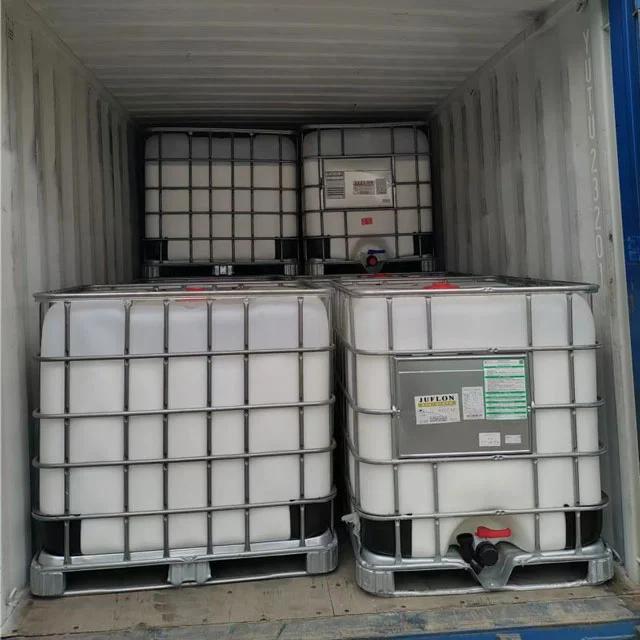
PTFE particles settle on prolonged standing or heating, and freezing causes irreversible settling — so storage and transit conditions decide whether a drum arrives usable. Peflon TDS spell out the limits (optimum 15–25°C, avoid >40°C, roll monthly, keep opened containers at pH 8–10).
- Climate-controlled warehousing and cold-chain transport for temperature-sensitive dispersion grades
- 25 kg drums and 1,350–1,400 kg IBCs for line-side or bulk use

Compliance Paperwork That Matches the Grade
Compliance statements differ by grade, and Peflon says so on the data sheet: FDA 21 CFR 177.1550 and the PFAS-compliant statement appear on PF-DW, PF-DP and PF-FR301KH/W; PF-DD and PF-DF carry an EU statement (no SVHC above 0.1%, RoHS, not CLP-classified). SDS and declarations on request.
- KKDIK / REACH documented
- Confirm the statement you need against the specific grade before you specify it
PTFE Dispersion — Frequently Asked Questions
What is PTFE dispersion?
PTFE dispersion is a water-based milky liquid of fine polytetrafluoroethylene particles held in suspension by a surfactant. It lets coaters and impregnators apply PTFE by dipping, flowing, spraying or rolling, then dry, bake and sinter it into a continuous film.
What is the solid content of Peflon PTFE dispersion?
Most grades are 60 ± 2% PTFE by weight; PF-DH runs 58–62% and PF-FR301KH/W 59–62%. Surfactant is 4–7%. Exact solids, viscosity, pH and particle size are on each grade’s TDS.
How is PTFE dispersion applied and cured?
It is applied by dip, flow, spray or roll coating, often in several thin passes. Each pass is dried to drive off water, baked to burn off the surfactant, and the final film is sintered above PTFE’s melting point (roughly 327–337°C), commonly at 380–420°C depending on substrate and film thickness.
How do I choose between the seven grades?
Match the grade to your process: PF-DD for glass-fiber impregnation, PF-DW and PF-DT for non-stick topcoats, PF-DP for primer or PTFE spinning, PF-DH as a concentrate for formulators, PF-FR301KH/W for anti-drip and fiber coating, PF-DF for impregnation or high-grade non-stick coatings. Send us your substrate and target film and we will shortlist a grade.
Can one PTFE dispersion be used for both coating and impregnation?
No, not reliably. Coating and impregnation need different particle size, viscosity and surfactant balance — a topcoat grade will not penetrate woven glass the way an impregnation grade does. Select by process route, not as if all dispersions were interchangeable.
Is PTFE dispersion the same as Teflon?
No. Teflon™ is Chemours’ brand name for its PTFE products; PTFE dispersion is the generic material, made by several producers. Peflon’s grades can be cross-referenced against branded dispersions such as Teflon™ PTFE DISP 30 — send your current TDS.
Is PTFE dispersion a PFAS?
Yes. PTFE is a fluoropolymer, which falls within the broad OECD and EPA definition of PFAS. Peflon’s dispersions are PFOA-free, and the PF-DW, PF-DP and PF-FR301KH/W data sheets state they are PFAS-compliant (free from 545 regulated PFAS substances) — a statement about listed substances, not about the polymer itself. See Is PTFE a PFAS? for the regulatory background.
Is Peflon PTFE dispersion food-contact compliant?
Yes, for specific grades: the PF-DW, PF-DP and PF-FR301KH/W data sheets state they meet US FDA 21 CFR 177.1550 for PTFE. The other grades do not carry that statement, so confirm the grade against your end use before specifying it.
How should PTFE dispersion be stored, and does it need re-mixing?
Store sealed, at 15–25°C, away from heat above 40°C and never frozen — freezing causes irreversible settling. Gently roll or mix monthly and before use, avoiding high-speed stirring or violent agitation, and keep the pH of opened containers between 8 and 10.
Related Fluoropolymers of PTFE Dispersion

FEP Dispersion
Need a melt-flowable film that fuses at a lower temperature than PTFE? Peflon also supplies aqueous FEP dispersion.
PFA Dispersion
Need thin-film, high-purity chemical-resistant coatings? Peflon also supplies aqueous PFA dispersion.
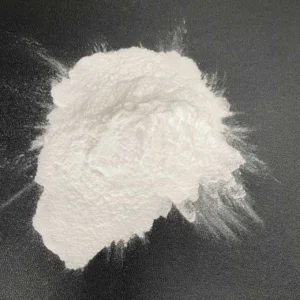
PTFE Micropowder
Need a dry PTFE additive for inks, coatings or lubricants instead of a liquid? Peflon also supplies PTFE micropowder.
Technical Support of PTFE Dispersion
Choosing and applying PTFE dispersion raises real engineering questions — grade selection, coating versus impregnation, curing, storage and PFAS status. Our technical library shares practical guidance from the Peflon materials team.
Is PTFE a PFAS? Understanding the Facts About This Essential Material
Where PTFE sits in the PFAS debate and what it means for compliance files.

PTFE or Ceramic Coating: Which is Better
PTFE versus ceramic coatings — the trade-offs cookware and industrial buyers weigh.
Get a PTFE Dispersion Grade Match & Sample
Tell us your coating or impregnation process, substrate and target film — or send the TDS of the grade you run today. Our engineers will shortlist a Peflon grade, send the TDS and reply within 24 hours.