
FKM, FEPM & Fluorosilicone Rubber Compounds
Ready-to-mold, fully-compounded fluoroelastomer and specialty rubber compounds for high-performance sealing — engineered for molders, OEMs and distributors worldwide.
- Hardness 40–90 Shore A, fluorine content 57–68%
- ISO 9001 certified, per-batch Certificate of Analysis
- Free samples, free TDS and technical support with a 24-hour reply
What Are Fluoroelastomer Rubber Compounds?
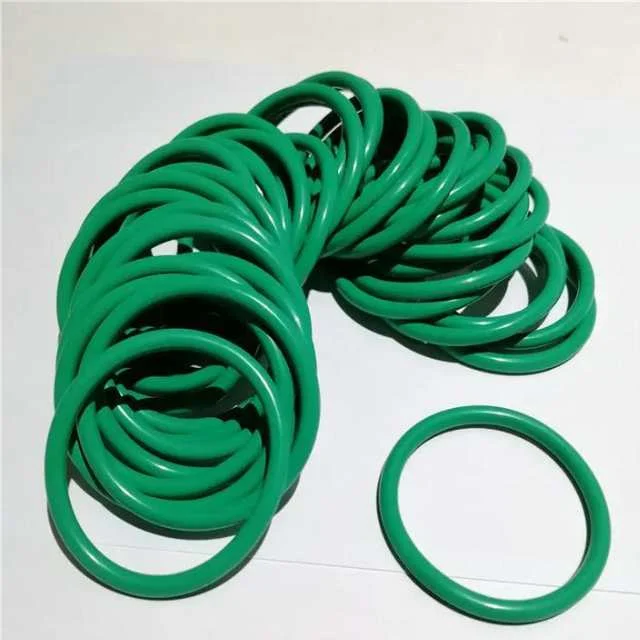
A fluoroelastomer compound is a fully-formulated, ready-to-mold rubber material in which the base fluoro-rubber gum has already been mixed with its cure system, reinforcing fillers, processing aids and pigments. Molders can press, transfer- or injection-mold it directly into finished seals — no in-house compounding required.
Peflon supplies three compound families covering the full span of sealing duty. FKM (fluoroelastomer) compounds deliver excellent resistance to heat, fuels, oils and most chemicals — the workhorse for O-rings, gaskets and oil seals. FEPM (AFLAS-type) compounds, free of vinylidene fluoride, withstand strong acids, strong alkalis and high-temperature steam where standard FKM fails. FVMQ fluorosilicone compounds combine silicone’s wide temperature range (−50 to 220°C) with fluoro-rubber’s oil resistance, for aerospace, automotive and medical sealing. Every grade ships with a per-batch ISO 9001 quality system and ASTM-method testing.
Fluoroelastomer Compound Properties
The fastest way to narrow the family before selecting a hardness grade.
| Property | FKM (Fluoroelastomer) | FEPM (AFLAS-type) | FVMQ (Fluorosilicone) |
|---|---|---|---|
| Fluorine content | 66–68% | 57% | — |
| Hardness range | 70–90 Shore A | 77 Shore A | 40–70 Shore A |
| Service temperature | −20 to ~200°C | up to ~230°C steam | −50 to 220°C |
| Best at | Fuels, oils, most chemicals, heat | Strong acids/alkalis, amines, steam | Low-temp + oil, low permeability |
| Weak against | Strong bases, amines, ketones | Lower fluorine; some fuels/solvents | Higher cost; lower mechanical strength |
| Typical parts | O-rings, gaskets, oil seals | Chemical-plant O-rings & gaskets | Aerospace/auto/medical seals |
| Cure system | Bisphenol | Peroxide | Peroxide / platinum |
Three Families, Three Jobs
Pick the family that matches the service environment, then choose a hardness grade.
FKM Fluoroelastomer
~66–68% F · 70–90 Shore A. The standard for heat, fuel, oil and chemical resistance. Bisphenol-cured, with grades optimized for O-rings, gaskets and metal-bonded oil seals. Use when: general high-temp sealing in oil, fuel or chemicals up to ~200°C.

FEPM / AFLAS-type
~57% F · 77 Shore A. TFE-propylene, peroxide-cured. Outstanding against strong acids, strong alkalis, amines and high-temperature steam — the chemical-industry specialist. Use when: media include caustic, acid, amines or steam that attack standard FKM.
FVMQ Fluorosilicone
40–70 Shore A · −50 to 220°C. Combines silicone’s high/low-temperature flexibility with fluoro-rubber’s oil and fuel resistance. Low permeability and good insulation. Use when: parts must stay flexible below −40°C yet resist oil and fuel.
Compound Grades
All values are typical post-cured properties, verified against Peflon’s internal TDS. Request the full data sheet and COA for any grade.
| Grade | Family | Fluorine | Hardness | Tensile / Elong. | Typical Use |
|---|---|---|---|---|---|
| PF-F1175 (PDF) | FKM terpolymer | 68% | 75 Shore A | 15 MPa / 200% | General-purpose O-rings, irregular-shaped rings & gaskets |
| PF-F1272 (PDF) | FKM terpolymer | 68% | 72 Shore A | 15 MPa / 260% | Auto, framework & valve-stem oil seals (metal-bonding) |
| PF-F1375 (PDF) | FKM terpolymer (HP) | 68% | 75 Shore A | 15 MPa / 200% | High-performance, media- & acid/alkali-resistant O-rings |
| PF-F1470 / 1475 / 1480 (PDF) | FKM dipolymer | 66% | 70–80 Shore A | 15 MPa / 260% | Dipolymer oil-seal series, 70 / 75 / 80 Shore A |
| PF-F2077 (PDF) | FEPM (TFE/P) | 57% | 77 Shore A | 15 MPa / 260% | O-rings & gaskets for caustic, acid & steam service |
| PF-F3040 (PDF) | FVMQ | — | 40 Shore A | ≥9 MPa | Soft sealing, diaphragms & low-closure-force parts |
| PF-F3050 / 3060 (PDF) | FVMQ | — | 50 / 60 Shore A | ≥10 MPa | General O-rings, oil seals & valve parts |
| PF-F3070 (PDF) | FVMQ | — | 70 Shore A | ≥10 MPa | Firmer seals & back-up rings |
Fluoroelastomer Compound Applications
Molders press, transfer- or injection-mold Peflon compounds directly into finished parts across these typical duty categories.
These compounds also work as the flexible outer cover of multilayer fuel and chemical hose, over a thermoplastic barrier layer — most often THV, which bonds to the elastomer without a separate tie layer. The compound carries the flex life and abrasion duty; the THV layer carries the permeation duty.
O-Rings & Gaskets
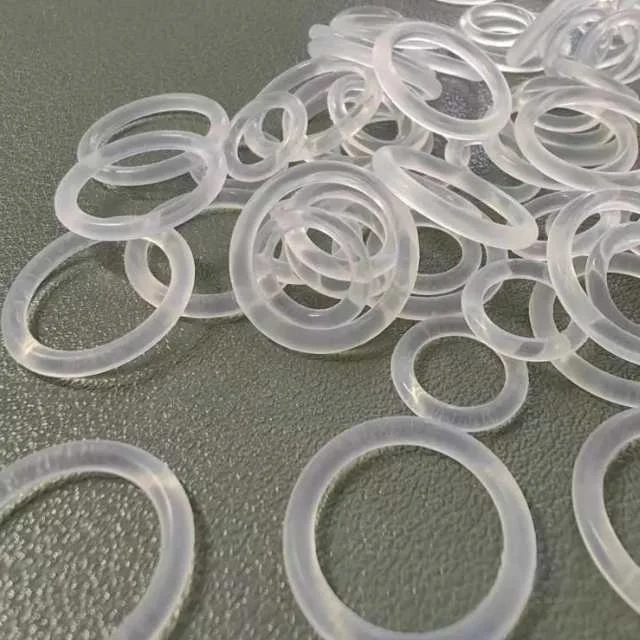
Molders press or transfer-mold FKM/FEPM compounds into static and dynamic O-rings and gaskets for general and chemical-plant sealing.
Metal-Bonding Oil Seals
Molders use dipolymer/terpolymer FKM grades with strong metal-bonding adhesion for automotive, framework and valve-stem oil seals.
Chemical-Plant Seals
Fabricators specify FEPM (AFLAS-type) grades for O-rings and gaskets exposed to caustic, acid, amine or high-temperature steam service.
Aerospace & Medical Seals
Molders use FVMQ fluorosilicone grades for aerospace, automotive and medical sealing where wide temperature range and low permeability matter.
How Molders Process Peflon Compounds
All three families are supplied fully compounded and ready to mold — no in-house compounding required. Choice of molding route depends on part geometry and production volume.
Compression Molding
Molders press the compound in a heated mold cavity — the standard route for O-rings and simple gasket shapes at low-to-medium volume.
Transfer Molding
Molders transfer compound through a sprue into a closed mold — suited to more complex geometries and inserts than compression molding.
Injection Molding
Molders injection-mold compound for high-volume, tight-tolerance parts with consistent cure and minimal flash.
Fluoroelastomer Chemical Resistance
Chemical resistance varies significantly by family — matching the family to your media is the first selection step, before hardness grade.
| Media | FKM | FEPM | FVMQ |
|---|---|---|---|
| Fuels, oils, most chemicals | Excellent | Good | Good (oil-resistant grade) |
| Strong acids / alkalis, amines | Poor — dehydrofluorination risk | Excellent | Fair |
| High-temperature steam | Fair | Excellent (to ~230°C) | Fair |
| Low-temperature flexibility | Fair (to −20°C) | Fair | Excellent (to −50°C) |
FEPM (AFLAS-type) has no vinylidene fluoride, so it avoids the dehydrofluorination that degrades standard FKM in caustic and amine service — this is the deciding factor when strong acids or alkalis are present.
Compounded for Consistency, Shipped With Proof
A compound is only as good as its batch-to-batch consistency. Peflon focuses on the manufacturing and documentation risks that matter most to molders.
In-House Compounding
- Proprietary curative-dispersion technology on internal and open mills
- Controlled mixing temperatures for scorch safety and batch-to-batch consistency
- Full traceability from base gum to finished compound
Tested & Documented
- Every batch checked for cure rheology (MDR), hardness, tensile, elongation and compression set to ASTM methods
- Shipped with a Certificate of Analysis
- Produced under an ISO 9001 quality system
Built to Your Spec
- Custom hardness, color and formulation on request
- Choice of bisphenol or peroxide cure, di- or terpolymer base
- Developed for your media, temperature and metal-bonding needs
Frequently Asked Questions
What is a fluoroelastomer (FKM) compound?
A fluoroelastomer (FKM) compound is a ready-to-mold rubber material made from a fluorine-containing base gum already mixed with its cure system, fillers and additives. It resists heat to about 200°C plus fuels, oils and many chemicals, and is molded directly into O-rings, gaskets and oil seals without further compounding.
What is the difference between FKM, FEPM (AFLAS) and FVMQ compounds?
FKM is the all-round fluoroelastomer for heat, oil and chemical resistance. FEPM (AFLAS-type) contains no vinylidene fluoride, so it resists strong acids, alkalis and steam that attack FKM, at a lower fluorine content (57%). FVMQ (fluorosilicone) trades some chemical resistance for a very wide temperature range, staying flexible from −50 to 220°C while resisting oil.
What is the difference between a compound, a precompound and gum rubber?
Gum rubber is the raw base polymer with nothing added. A precompound has the cure system pre-mixed in but no fillers, so the molder still adds reinforcement. A compound is the complete, ready-to-mold formulation — base polymer, cure system, fillers, additives and color — that goes straight into the mold.
Which compound resists strong acids, alkalis and steam?
FEPM (AFLAS-type) is the right choice for strong acids, strong alkalis, amines and high-temperature steam. Because it has no vinylidene fluoride, it avoids the dehydrofluorination that degrades standard FKM in caustic and amine service. Peflon’s FEPM grade is PF-F2077.
What temperature range do these compounds withstand?
FKM grades serve continuously from about −20 to 200°C (higher short-term); FEPM withstands high-temperature steam up to roughly 230°C; and FVMQ fluorosilicone stays flexible across the widest span, −50 to 220°C. Choose the family by the low-temperature limit and the chemical media first, then the hardness grade.
Can I order custom hardness, color or a tailored formulation?
Yes. Hardness is available from roughly 40 to 90 Shore A and any color on request. We also develop custom formulations — selecting di- or terpolymer base, bisphenol or peroxide cure, and adhesion or filler packages — to match your service media, temperature and metal-bonding requirements.
Do you provide samples, data sheets and a Certificate of Analysis?
Yes. Free evaluation samples, full technical data sheets and a per-batch Certificate of Analysis are available on request. Production runs under an ISO 9001 quality system with ASTM-method testing. Contact us with your grade or application to receive documentation.
Related Fluoropolymer & Sealing Materials
What is PTFE
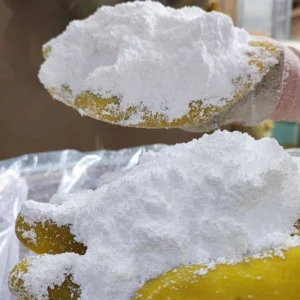
Full PTFE range — fine powder, moulding powder, dispersion and finished shapes for seals and gaskets.
PFA Material Supplier | Peflon
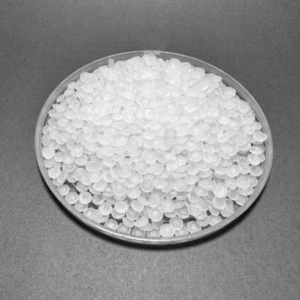
Melt-processable PFA resin for liners, wire, cable, film and semiconductor parts.
Technical Support for Fluoroelastomer Compounds
Selecting the right compound family and grade raises real engineering questions — media compatibility, temperature limits, cure system and molding route. Our technical library shares practical, hands-on guidance from the Peflon materials team.
What Are Fluoropolymers? What Are Their Importance and Applications
Types Of Gaskets

What is Compression Molding?
Tell Us Your Service Conditions — We'll Match the Grade
Send your media, temperature and target hardness for a quote, sample or custom formulation. Our engineers will reply within 24 hours.