
PTFE & Spring-Energized Seals Manufacturer
Virgin and filled-PTFE sealing components for rotary, reciprocating and static duty — chemically inert, self-lubricating and dry-running from −200 °C to +260 °C, machined or spring-energized to your drawing.
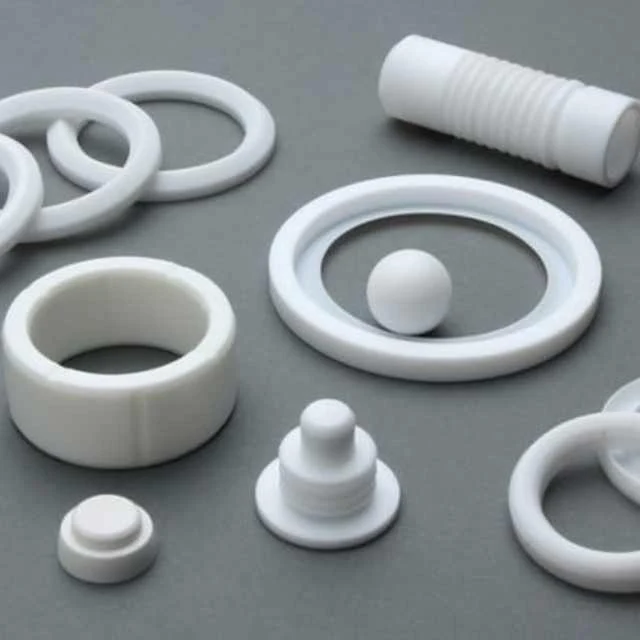
What Is a PTFE Seal?
A PTFE seal is a sealing element machined or moulded from polytetrafluoroethylene — virgin PTFE or a filled PTFE compound — that contains fluids and gases on rotating shafts, reciprocating rods and static joints. Because PTFE is chemically inert, self-lubricating and stable across a very wide temperature range, PTFE seals run where rubber and elastomer seals fail: aggressive chemicals, high and cryogenic temperatures, dry or poorly-lubricated service and high sliding speeds.
Pure PTFE has low load-bearing strength and tends to cold-flow, so seals are usually either spring-energized — a metal spring loads the PTFE lip against the sealing face — or made from filled PTFE to raise wear resistance, PV limit and dimensional stability. The base fluoropolymer, PTFE (CAS 9002-84-0), is supplied by upstream producers such as Daikin.
Types of PTFE Seals We Manufacture
Spring-Energized Seals
A U-, V- or helical spring energises the PTFE jacket for reliable sealing at low pressure, cryogenic temperature and high speed — pumps, actuators and cryogenic valves.
Rotary Shaft & Lip Seals
Dry-running rotary seals for shafts, mixers and pump housings where oil lubrication is impossible or contamination must be avoided.
Piston & Rod Seals
Low-friction, no stick-slip seals for hydraulic and pneumatic cylinders — smooth motion and long service life.
PTFE Back-Up Rings
Anti-extrusion support rings that let O-rings work at high pressure without gap extrusion.
V-Ring / Chevron Packing
Adjustable stacked packing sets for reciprocating rods and valve stems in aggressive media.
Ball-Valve Seats & Stem Seals
Chemically-inert seats and stem seals for ball, butterfly and control valves.
PTFE Seal Materials & Fillers
| Grade | Key Benefit | Typical Seal Use |
|---|---|---|
| Virgin PTFE | Maximum chemical purity, FDA-grade | Food, pharma, ultra-pure chemicals |
| Glass-filled (15–25%) | Wear & creep resistance, higher PV | Rotary & dynamic seals, water |
| Carbon / Graphite-filled | Wear resistance, thermal conductivity | Pumps, hydraulics, water & steam |
| Bronze-filled | High load & wear, thermal conductivity | High-pressure hydraulic seals |
| Carbon-fibre / MoS₂ | Low creep & friction, non-abrasive | Dry-running dynamic seals |
Key Properties
| Property | Specification |
|---|---|
| Continuous service temperature | −200 °C to +260 °C (short peaks ~300 °C) |
| Chemical resistance | Near-universal; inert to almost all media |
| Coefficient of friction | 0.05–0.10, no stick-slip, self-lubricating |
| Pressure (with spring / back-up) | to 40 MPa and above |
| Compliance | Virgin PTFE FDA 21 CFR 177.1550; PFOA-free |
Where PTFE Seals Are Used
PTFE Seals FAQ
What temperature range can PTFE seals handle?
Virgin and filled-PTFE seals work continuously from −200 °C up to +260 °C, with short excursions near 300 °C — far wider than rubber or elastomer seals, which is why PTFE is chosen for cryogenic and high-temperature duty.
Can PTFE seals run dry?
Yes. PTFE is self-lubricating with a very low coefficient of friction, so PTFE and spring-energized seals can run dry or with minimal lubrication where elastomer seals would burn or gall.
Which PTFE filler should I choose?
Glass-filled PTFE for general wear and creep resistance; carbon/graphite for wear plus heat in water and steam; bronze for high load and pressure; carbon-fibre or MoS₂ for low-friction dry-running against soft shafts. Virgin PTFE where FDA purity is required.
PTFE seal vs rubber / elastomer seal — what is the difference?
PTFE wins on chemical resistance, temperature range and dry-running, but has little inherent elasticity — so PTFE seals are spring-energized or filled to maintain sealing force, whereas elastomers rely on their own rubber elasticity.
Do you make custom PTFE seal sizes?
Yes. We machine PTFE seals to your drawing from virgin and filled stock — see our PTFE block/billet and PTFE rod for the semi-finished shapes used to cut seals and back-up rings.
Related Products
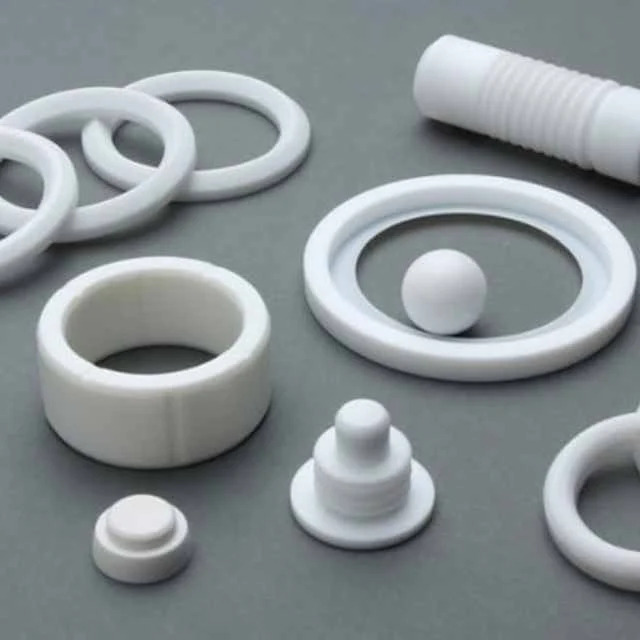
Seals & Bearings
PTFE seals and bearings engineered for low friction and long service life across process equipment.
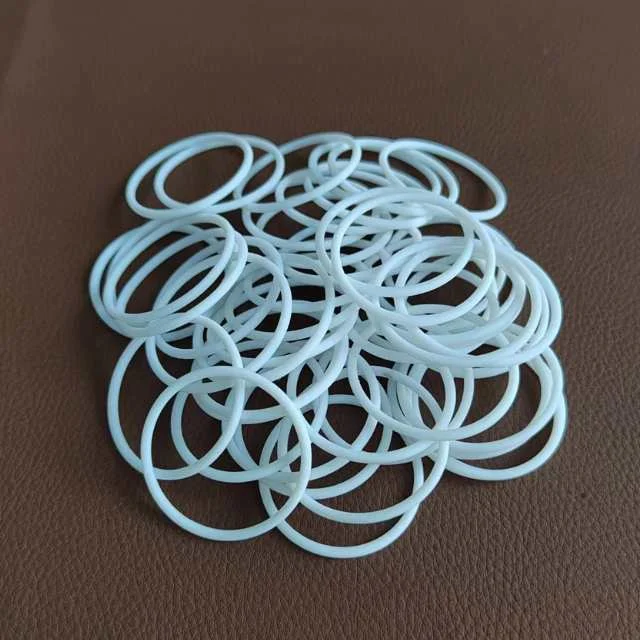
Teflon O Ring
Virgin, filled and encapsulated Teflon (PTFE) O-rings to AS568, ISO 3601 and JIS B 2401.
Contact Us for PTFE Seals
Send your drawing or application details for a free PTFE seal sample and bulk quote — one-stop technical support with traceable QC.